
Why I Don’t Use Pressure Treated Wood for DIY Planter Boxes
Is pressure-treated wood safe for planter boxes? Here’s what I found and why I choose not to use it for growing vegetables.
What Should I Build Next?
That's the question I help answer.
Every week, I send woodworking ideas to 17,000 DIYers who love building things.
You'd fit right in.
I see questions like this come up all the time in woodworking groups: “I built some planter boxes with pressure treated wood. Is it safe to grow veggies in them?”
And the answers usually turn into a debate:
- “Don’t use pressure treated wood for raised planters, it’s toxic.”
- “It’s fine, they changed the chemicals years ago.”
So which is it?
I went down the rabbit hole to figure out what’s actually true. And even after reading the research, I decided not to use it for my garden projects.
Here’s why.
This article contains affiliate links. If you purchase from these links, I may earn a small commission at no additional cost to you. Visit my site policies for more information.
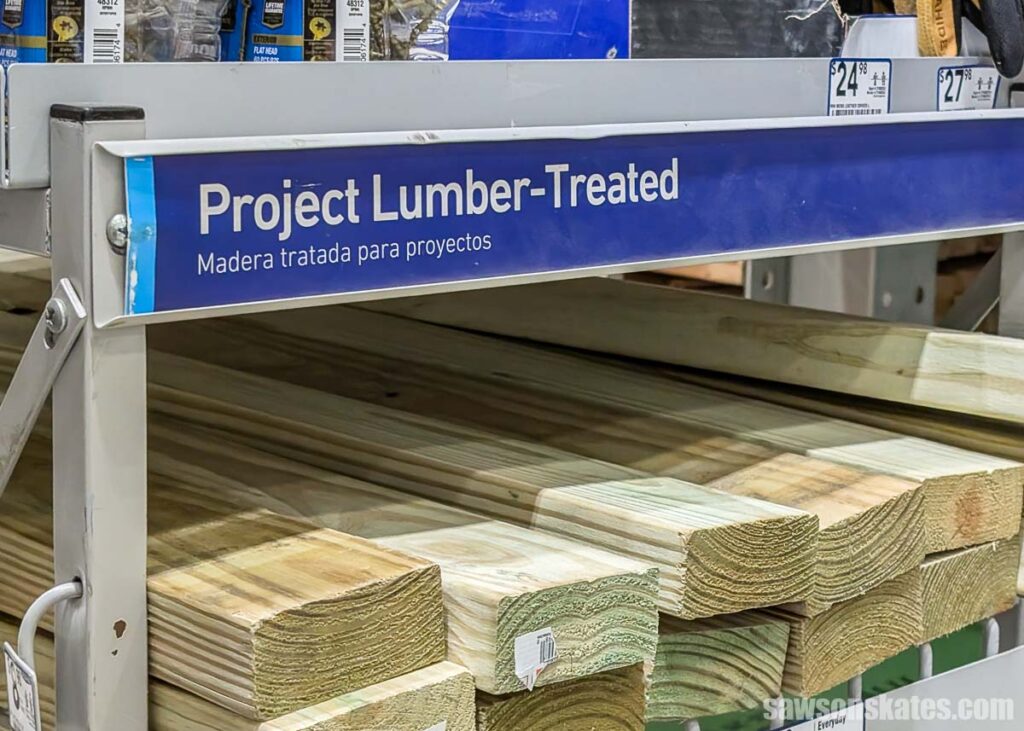
What Is Pressure Treated Wood?
Pressure treated wood is regular lumber that’s been infused with chemicals to help it resist rot, insects, and moisture.
That’s why you’ll see it used for decks, fences, and other outdoor projects. It lasts longer, often costs less than naturally rot-resistant wood, and is easy to find at any home center.
On the surface, it seems like a great option for a planter box. It’s durable, budget-friendly, and designed to handle the outdoors.
But the part that gives people pause is those chemicals.
A Quick Look at the History
The concern around pressure treated wood didn’t come out of nowhere.
Before 2004, most pressure treated lumber in the U.S. was treated with something called chromated copper arsenate (CCA). As the name suggests, it contained arsenic, a toxic chemical that can be harmful to people if ingested over time.
That raised some real concerns. Research showed that arsenic and other chemicals could leach from the wood into the surrounding soil.
- The National Pesticide Information Center notes that arsenic, chromium, and copper from CCA-treated wood can move into nearby soil.
- The University of Maine Cooperative Extension also points out that CCA-treated wood has known issues with leaching.
Because of that, CCA-treated wood was phased out for most residential uses, including decks and garden structures.
So when you hear people say pressure treated wood is toxic, this is usually what they’re referring to.
What Changed?
Around 2004, arsenic-based treatments like CCA were phased out for most residential uses.
They were replaced with newer treatments, like alkaline copper quaternary (ACQ) and copper azole. These formulas don’t contain arsenic and are generally considered safer for everyday projects.
Extension sources, such as the University of Maine, note that newer treatments are not known to have the same toxicity concerns as older CCA-treated wood.
So… Is It Actually Safe for Garden Planter Boxes?
This is where things get a little less black-and-white.
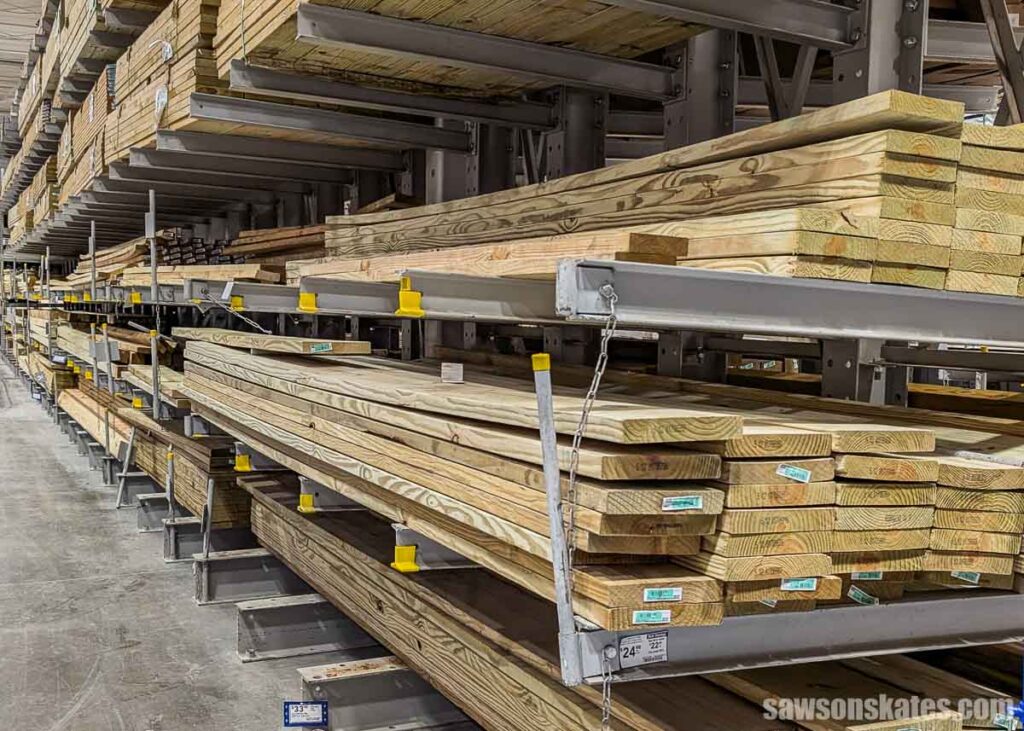
Today’s pressure treated wood is very different from what was used in the past. It no longer contains arsenic, and many sources say it’s generally safe for use around gardens.
For example, the University of Florida Extension explains that modern treatments were designed to be safer for residential use.
At the same time, that doesn’t mean nothing transfers into the soil.
Oregon State University Extension notes that small amounts of chemicals can still leach from pressure treated wood, although typically at very low levels.
There are also a couple of important details that often get overlooked.
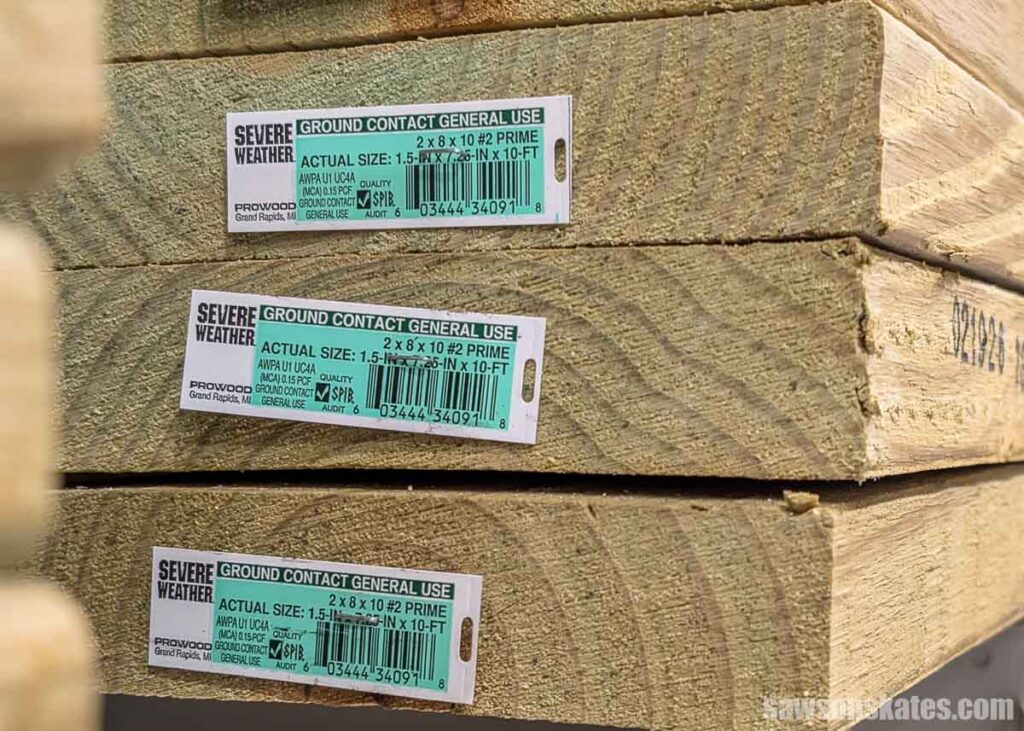
For one, USDA organic standards prohibit the use of treated lumber where it may come into contact with soil used to grow food.
And even when extension sources say modern treated wood is low risk, they often still recommend alternatives. The University of Maine Cooperative Extension, for example, suggests using untreated wood if you want to avoid any potential contamination risk.
So, depending on how you look at it, you’ll see two slightly different conclusions:
Some say the risk is low enough that it’s not worth worrying about. Others say when it comes to growing food, even a small or uncertain risk might be worth avoiding.
Why I Don’t Use Pressure Treated Wood for Raised Planters
Even after looking at the research, I still choose not to use pressure treated wood for my DIY planters.
For me, it comes down to a pretty simple idea.
I’d rather not risk putting those chemicals into my body.
And even though the risk from modern pressure treated wood is considered low, it’s not zero. There’s still some uncertainty, and I’d rather not introduce that into something I’m going to eat.
It’s also telling that organic growing standards don’t allow treated lumber where it can come into contact with soil used for food. And even many extension sources that say it’s low risk still suggest using untreated wood if you want to avoid any potential contamination.
That was enough for me. Whether I’m growing it myself or buying it at the store, I try to choose organic options when I can.
On top of that, I don’t really feel like I’m giving anything up by skipping it. There are plenty of other options that work just fine for planters.
So for my outdoor projects, such as raised planters and garden boxes, it’s an easy choice.
I just don’t use it.
What I Use Instead
For my planters, I keep it simple. I use untreated wood.
If I want something budget-friendly, I’ll use pine and accept that it might not last forever. For something that lasts a bit longer, I usually go with cedar.
Cedar is naturally rot-resistant, doesn’t need chemical treatment, and works well for outdoor projects like planters.
That’s what I used for this planter. It’s made from cedar pickets and designed with a removable box, which makes planting and cleanup a lot easier.
And for me, that’s really the point.
I can build something that works, holds up outdoors, and doesn’t use any added chemicals near the soil where I’m growing food.
If You Decide to Use Pressure Treated Wood
If you decide to use pressure treated wood, there are a few ways to reduce contact with the soil.
You can line the inside of the planter with plastic, leave space for drainage, and avoid direct soil contact where possible.
You can also avoid growing root crops like carrots or potatoes, since some guidance, like the University of Saskatchewan, notes these crops can take up more chemicals from the soil.
And one more important thing.
Any time you’re cutting wood, especially pressure treated lumber, wear a dust mask or respirator. You don’t want to be breathing in those chemicals.
It’s also not recommended to burn pressure treated wood for the same reason.
Final Thoughts
At the end of the day, pressure treated wood isn’t what it used to be.
The chemicals have changed, and most sources agree that modern treated wood is considered low risk for garden use.
But low risk isn’t the same as no risk.
And when it comes to something I’m growing to eat, I’d rather keep things as simple and predictable as possible.
There are plenty of other materials that work just as well for planters, without adding any uncertainty into the mix.
So while some people are comfortable using pressure treated wood for vegetable planters, I’m not.
Pin This For Later

Hi there – I’m Scott, a woodworking enthusiast and creator of Saws on Skates, a site I started in 2015 to share easy-to-follow tutorials, space-saving shop tips, and project inspiration for DIYers at any skill level. Learn more about my woodworking journey here.