
Why I Don’t Use Plywood (and What I Do Instead)
If you’ve spent any time around my site, you might’ve noticed something missing from my builds: plywood.
I don’t use it very often. Not because I’m trying to be trendy or different, but because it usually doesn’t fit the way I work or the kind of projects I like to build.
What Should I Build Next?
That's the question I help answer.
Every week, I send woodworking ideas to 17,000 DIYers who love building things.
You'd fit right in.
Wrestling 4×8 Sheets in a Small Shop
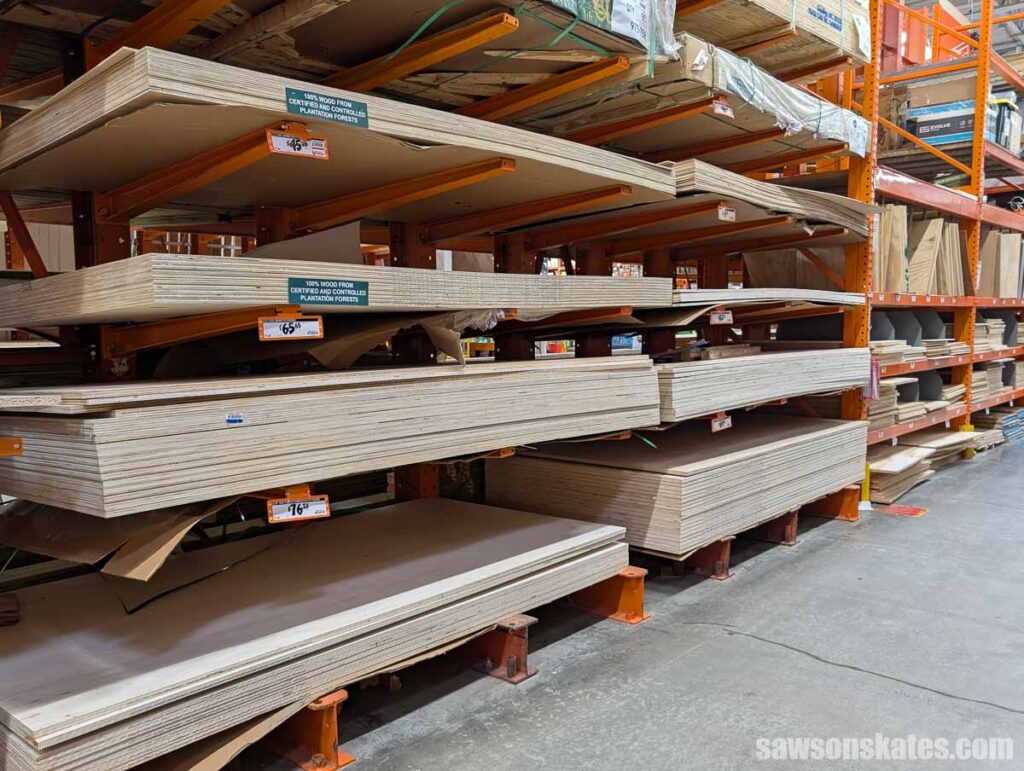
First off, my shop is small. Like really small. Everything’s on wheels and space is tight. Now picture trying to maneuver a 4×8 sheet of plywood around that space. It’s like trying to park a school bus in a broom closet.
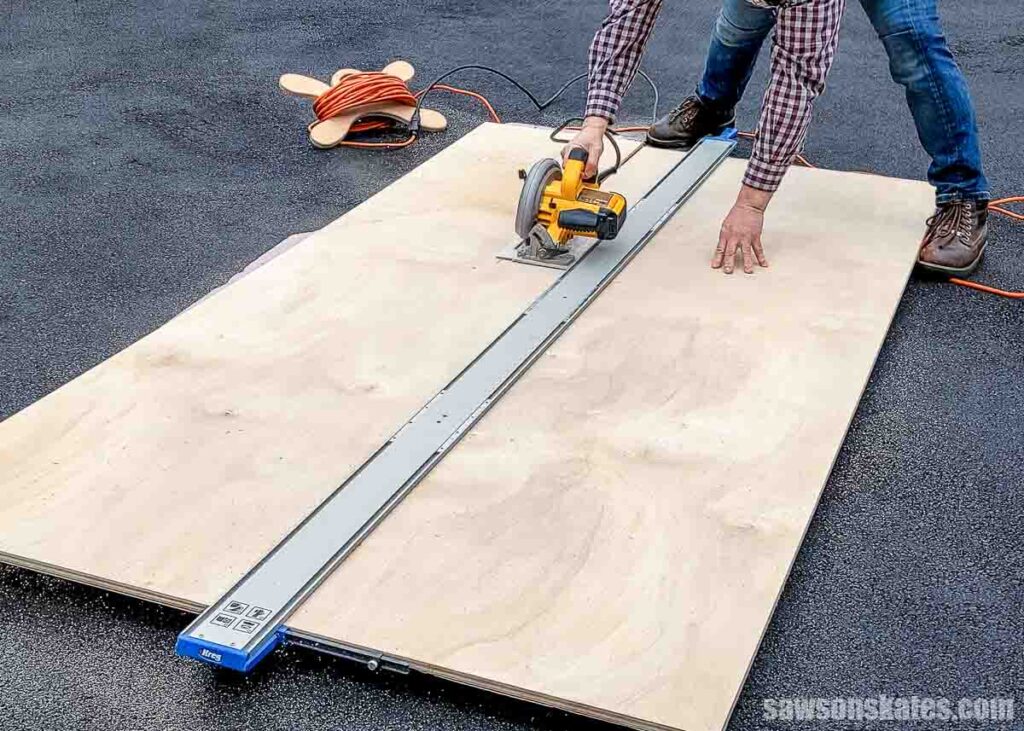
So I do what many of us do: I cut plywood outside, usually in my driveway. And depending on the season, I’m dodging rain, snow, or the occasional wind gust that can turn a sheet into a sail. It’s not just inconvenient; it can be exhausting.
What’s in This Stuff, Anyway?
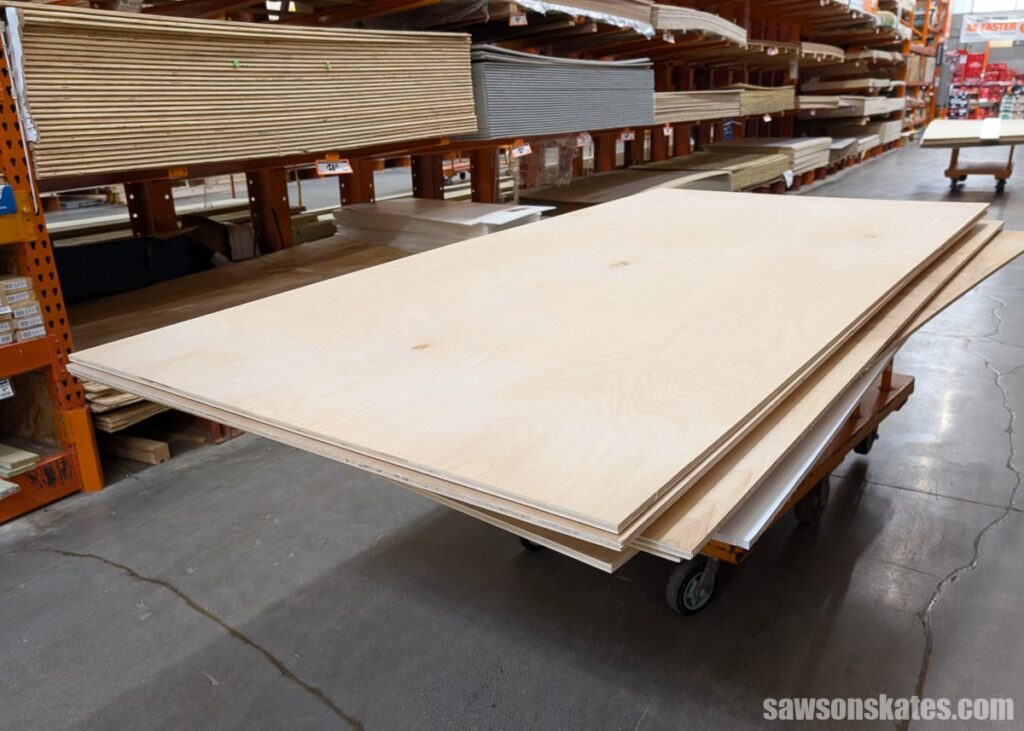
Then there’s the dust. I don’t know everything that’s in those plywood panels; formaldehyde, synthetic adhesives, who knows what else, but I do know I don’t want to breathe it in. Even with my respirator and dust collection, it’s hard to feel good about filling your shop with that stuff.
The Look Just Isn’t the Same
Many of my projects have a handcrafted, antique-inspired, rustic, or farmhouse look and for that, I want the materials to feel just as authentic.
Early furniture makers didn’t have access to plywood, they built tables, cabinets, and chests from solid wood. That tradition shows in the final piece. The visible seams between boards give it character and a sense of age, something a single sheet of plywood just can’t replicate.
Plywood often looks too uniform and manufactured for a handmade project. Even when it’s painted, something about it still feels… off. Solid wood just has more warmth and life.
What I Use Instead
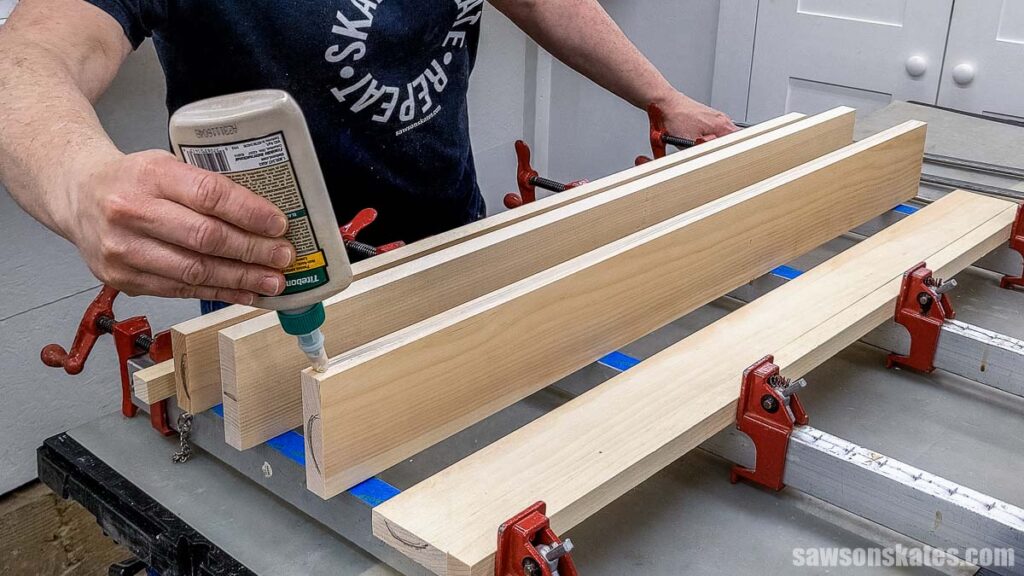
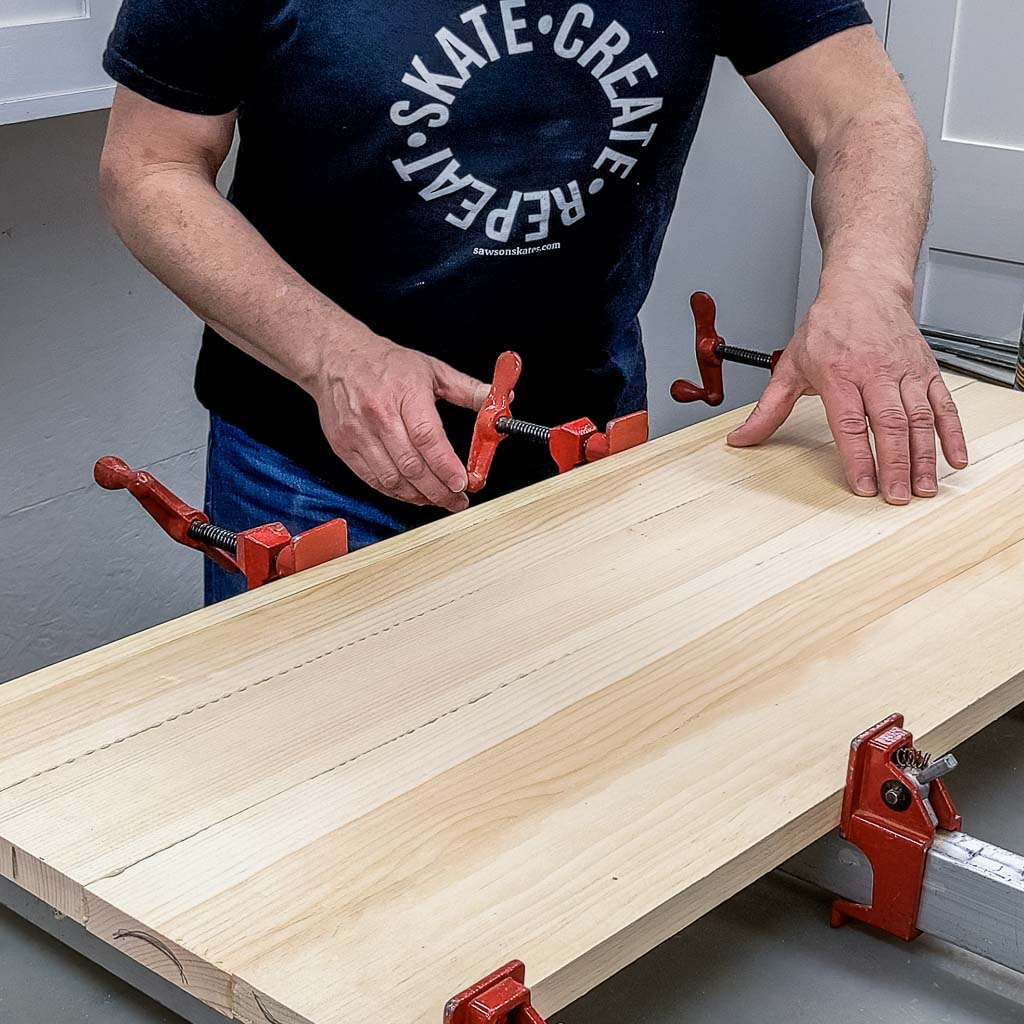
Instead of wrestling plywood, I build my own panels by edge-gluing boards together.
I usually use pine. It’s affordable, easy to find, and light enough to move around in my small shop. But you can use whatever solid wood suits your project, oak, cherry, or anything in between.
Gluing up panels gives you complete control over the size, the look, and the feel of your material and you don’t need to haul any 4×8 sheets around.
And it’s not just about convenience, building your own panels can be a better value, too.
As my friend Steve, a fellow woodworker, put it:
“It’s actually cheaper for me to make panels. I haven’t used plywood in a long time.”
Do I Ever Use Plywood?
Sure. I occasionally use it for shop projects, like my French cleat wall and custom tool holders. It was convenient. And while I wanted them to look good, they didn’t need the same aesthetic as a piece of furniture I’d use in my home.
For me, it just makes more sense to reserve plywood for utility builds and use solid wood for everything else.
Are Glued-Up Panels Right for Every Project?
Not always.
If you’re building something large like kitchen cabinet carcasses or a big built-in entertainment center, glued-up panels probably aren’t the way to go. Time-wise, it just wouldn’t make sense. You’d spend a lot of effort gluing and clamping panels that will mostly be hidden once everything’s assembled.
The same goes for shop cabinets, utility shelves, or drawer boxes inside a dresser. In those cases, plywood is usually more efficient.
So no, glued-up panels aren’t a one-size-fits-all solution.
But when the panel will be visible on a tabletop, door, drawer front, or side panel of a piece of furniture, and when you want the finished piece to have warmth, character, or that handcrafted feel? That’s when I think solid wood really shines.
What About the Learning Curve?
Yes, glue-ups take time. And yes, there’s a bit of a learning curve if you’ve never done one. But once you get the hang of it? It opens up a whole new world of possibilities.
That’s why I put together a class just for panel glue ups. This text-based course walks you through my entire process, how I choose boards, how I lay them out for looks and stability, how I clamp, and even how I clean up the glue mess. All with basic tools.
You don’t have to give up plywood forever. But if you’ve ever gotten frustrated cutting it in the cold, or if you’ve ever wished your projects looked more like real furniture than something from a big-box store, maybe it’s time to try a different approach.
👉 Click now for my Beginner’s Guide to Gluing Up Wood Panels Class
Final Thoughts
Plywood’s not the enemy, but there are other options.
For me, glued-up solid wood panels just look better. They feel better. And they connect my projects to a long tradition of furniture-making that goes back generations.
If you’ve ever found plywood frustrating or just want your projects to have more character, it might be worth trying a different approach. It takes a little more time, but in my experience, the results are absolutely worth it.
BEGINNER’S GUIDE TO GLUING UP WOOD PANELS
Learn how to glue up solid wood panels using basic tools and easy techniques. No fancy tools, no stress, just solid results that will impress your family and friends.
Pin This For Later

Hi there – I’m Scott, a woodworking enthusiast and creator of Saws on Skates, a site I started in 2015 to share easy-to-follow tutorials, space-saving shop tips, and project inspiration for DIYers at any skill level. Learn more about my woodworking journey here.
This guy s thoughtful, thanks for sharing.
I am not at all a fan of the adhesives, etc in engineered wood products (though it seems there’s been an effort to move towards better materials, such as NAF glues, etc–we just had cabinets built for a new home and went through a bit of an ordeal to convince our cabinet maker to source cleaner engineered wood products so we can avoid the excessive outgassing in our new home, but with tariffs he was actually able to change to a domestic supplier and save money).
Having said that, the one major benefit of plywood (beyond convenience) is its dimensional stability compared to edge-glued solid wood panels.
I am not sure.
While I understand and respect your position, I am not it is a truly valid point. Yes, there was woodworking before plywood, and there are ways to mitigate wood movement, but even the better pieces were subject to crazy temperature swings that cracked boards. My 1890 home is proof of that. It is easy to dismiss it as being built by unskilled carpenters but I am not sure if that is true. This house has provided a home on two islands and was moved by barge from one island to the next in the 1930’s. A look at the hurricane blocking within it will prove it was made to stand the test of time, and has for 136 years out at sea.
While I can do traditional woodworking and have found hand-tool-only woodworking has increased my enjoyment and skill level, I am not ready to give up my skillsaw quite yet. In fact, if you could bring the grid along with a skillsaw back to our forefather-carpenters, I bet they would grab for the powered saw every time.
Such as it is with plywood. I appreciate traditional joinery, but darn, give me a project and sometimes I am just craving a big, flat, dimensional piece of plywood like my wife looks at chocolate I suppose. I just need it, and NOW! And while I typically see this as a cop-out, in this case I think it is oh so true: if our forefathers had plywood, they would have used it… a lot! They got by for sure, but only because they did not know what they were missing.