
3 Reasons Why I Don’t Use Polyurethane
Polyurethane has its place, but for me, I generally don’t use it for my DIY furniture projects. Polyurethane is too finicky, the application is difficult and it doesn’t give the look I want for my projects. These are three reasons I don’t use polyurethane and today I’m sharing what finish I use instead.
For your convenience, this post contains affiliate links to supplies or tools I used to complete this project. Purchases made using these links help support the Saws on Skates website and allow me to share more DIY projects. and DIY tips with you. There is no cost to you for using these links. Click here to visit my site policies.
Properly Prep Your Project
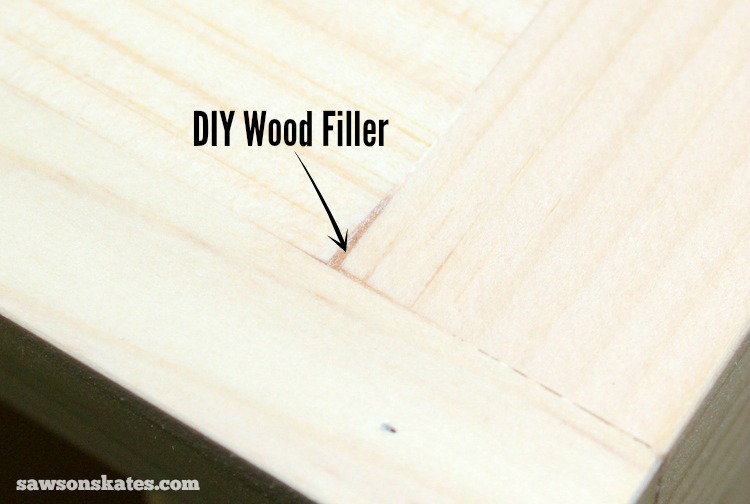
Before I share why I’m not a fan of polyurethane, first I properly prepare my DIY furniture project for a finish coat. The first step to a flawless finish is to properly sand the project. Next, I inspect the piece and fill any nail holes, gaps or cracks with an easy to make DIY wood filler.
My DIY wood filler is made with sanding dust from the furniture project I’m working on, so the filler always perfectly matches the wood color of my project.
If I’m staining the project, first I apply a coat of black tea. Applying tea helps prevent blotchiness and gives my DIY furniture a rich, uniform color when the wood stain is applied. After the tea dries and the piece is sanded, I apply the wood stain. I’m a BIG fan of Rust-Oleum Ultimate Wood Stains. I love the one coat coverage, the quick drying time and Rust-Oleum stains always produce deep, rich stain colors.
What is Polyurethane?
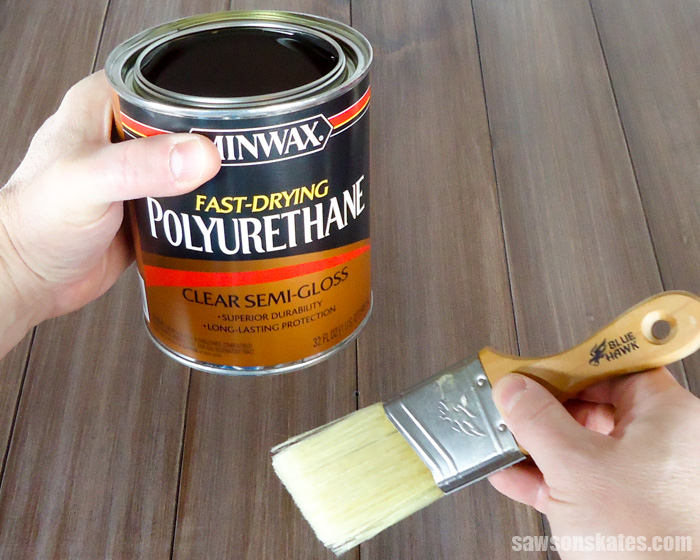
Polyurethane is a product used to seal and protect wood. The durability of a polyurethane film finish depends on how thick the dried film is. Three coats of poly are usually needed to provide an adequate amount of durability.
Polyurethane can be applied with a brush, sprayer or spray can. A wipe-on poly is also available.
There are two types of poly. Oil-based and water-based. Oil-based poly cleans up with paint thinner. Water-based poly cleans up with water.
Oil-based poly slightly darkens and enhances the wood grain. Water-based poly has no depth of finish. In other words, it does not enhance the wood grain.
Poly is available in different sheens like matte, satin, semi-gloss and gloss.
Related: Polycrylic vs Polyurethane: Are They the Same?
What is Polyurethane Used For?
Poly is used to seal and protect wood. It prevents oil, grease, and water from penetrating wood doors, floors, cabinets, and furniture. It’s a durable finish that also protects against heat and scratches.
3 Reasons Why I Don’t Use Polyurethane
Finicky Finish
Polyurethane is way too fussy for me. Just look at the instructions on the back of the container… polyurethane must be applied in a dust free environment. That rules out applying polyurethane in my workshop or applying polyurethane outside. In my small house, that means I’m applying poly to my furniture projects in my kitchen!
Air bubbles are also an issue with polyurethane. Never shake a can of polyurethane or wipe your brush on the rim of the can because you’ll introduce bubbles into the finish. The bubbles will dry in your finish and leave the surface bumpy. The only way to get rid of the bubbles is to sand, which means more time and effort.
Just like air bubbles, drips can be an issue with polyurethane. Drips must be corrected right away while still wet. If drips are allowed to dry they’ll need to be cut out with a razor blade and sanded. Again, this is an extra step that will consume your time and effort
Application is Difficult
Applying polyurethane is difficult. The product must be applied with a brush in long, even strokes. You must also keep a wet edge. If you touch an area with your brush that is dry or drying, you’ll pull the finish which could leave bumps when it finally dries. These bumps will need to be sanded.
To apply additional coats, you’ll need to lightly sand with 220 grit sandpaper or steel wool. Again, this means more time and effort.
The Final Look
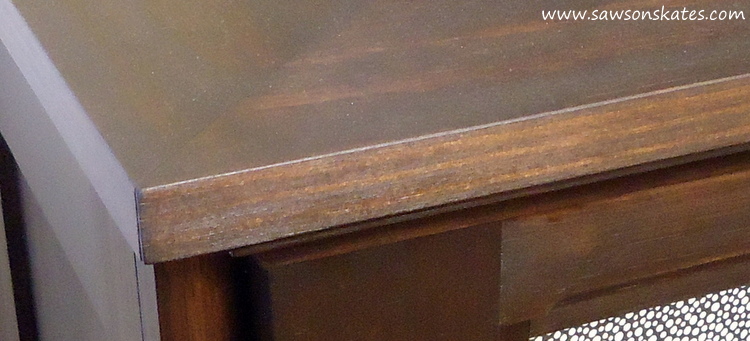
While polyurethane provides a clear, durable finish, to me it looks plastic-like. Polyurethane does not become part of the wood. If you look closely, you can see it just sits on top of the surface.
Where to Use Poly
Don’t get me wrong, polyurethane has its place. It’s great for floors, doors, woodwork around windows and doors and furniture that will get lots of abuse like dining tables and kitchen cabinets.
What I Use Instead
For my furniture projects, I use a top coat that is waaaay less finicky, the application is a snap and the finish looks like a hand rubbed finish you might find on a quality antique. I use Bob’s Miracle finish for wood!
Bob’s Miracle finish for Wood is a DIY wipe on top coat you make yourself. It’s three simple ingredients: gloss spar varnish, boiled linseed oil and paint thinner.
Easy Finish
Because Bob’s Miracle finish for wood is a wipe on top coat, you don’t have to worry about applying in a dust free environment. You simply wipe it on, allow it to penetrate the wood for a few minutes, then wipe off. This means you can apply outside with plenty of fresh air and not have to worry about dust or insects getting trapped in your finish.
Air bubbles and drips aren’t a concern either. Again, you’ll wipe it on and wipe it off. So bubbles and drips are virtually impossible.
Easy Application
Did I mention Bob’s Miracle finish for wood is a wipe on top coat? That means the application is sooo easy! Wipe it on with a rag, allow to penetrate and wipe it off with a clean rag. That’s it! No brushes, no worrying about keeping a wet edge and no sanding in between coats.
Final Look
Because Bob’s Miracle finish for wood actually penetrates into the wood, it becomes part of the wood itself. It doesn’t have that plastic, floating on top of the wood look that poly has. For me, Bob’s Miracle finish for Wood has the exact look I want for my furniture projects. A timeless, not too shiny, hand rubbed look you might find on a quality antique.
Where to Use
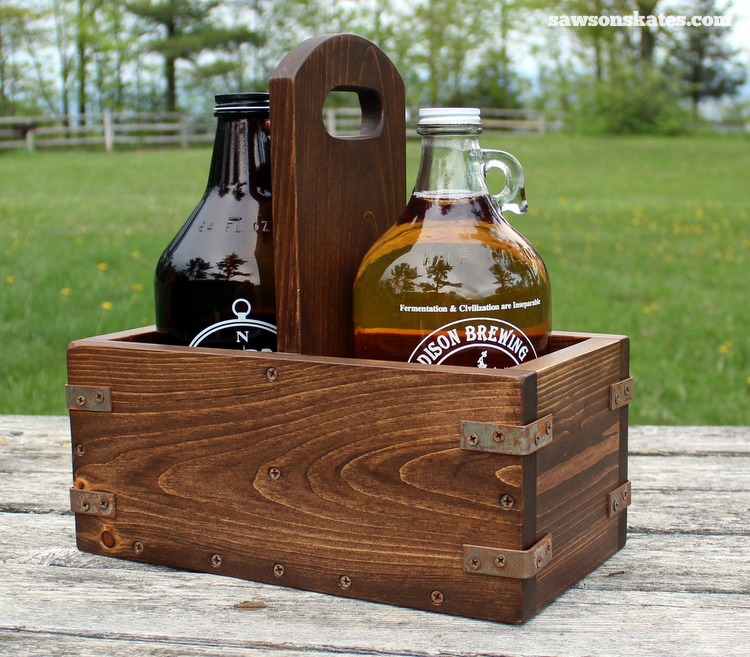
I’ve used Bob’s Miracle Finish for Wood on many of my DIY furniture projects. I’ve used it on my bar cart, vintage industrial chalkboard shadowbox, craft beer growler carrier, air conditioner dresser, knockoff chalkboard shelf, electric fireplace mantle, knockoff stool, wine cabinet and apothecary cabinet. So yes, I’ve used it on quite a few projects!
UPDATE: My Polyurethane Change of Heart
Earlier this year I was getting ready to paint the outdoor coffee table and estimated it was going to take me SEVEN HOURS to paint the pieces with a brush! That’s when I decided to buy a HomeRight Super Finish Max paint sprayer. Thanks to the sprayer I was able to spray a coat of primer and spray two coats of paint in only a few hours. WHAT A TIME-SAVER!
Since buying a paint sprayer I’ve been sprayin’ like crazy! I started with the outdoor coffee table. Then I sprayed the cedar clapboard siding of my house, updated the look of my air conditioner dresser with a coat of paint, and freshened up a pair of Adirondack chairs. I’ve also primed and painted a new project I’m working on.
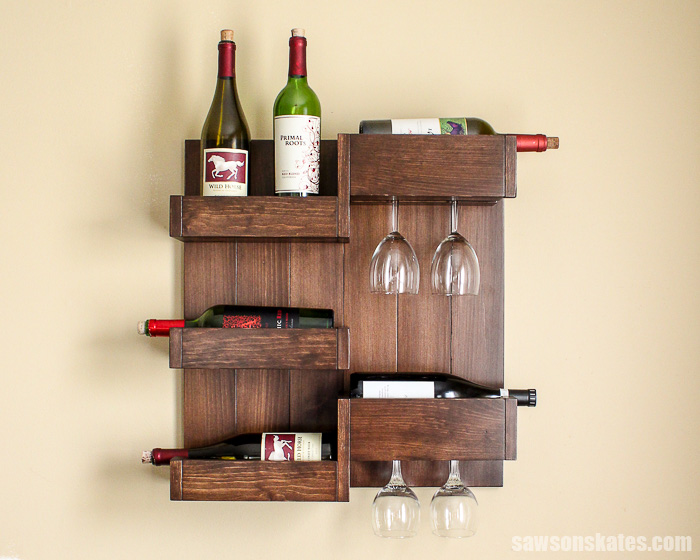
While reading the HomeRight Super Finish Max paint sprayer instructions I noticed it could be used to spray polyurethane. Really? I never thought of spraying poly. Could this be the way to solve the poly pitfalls I mentioned earlier? I had to test it out and my DIY wine bar was going to be the test project.
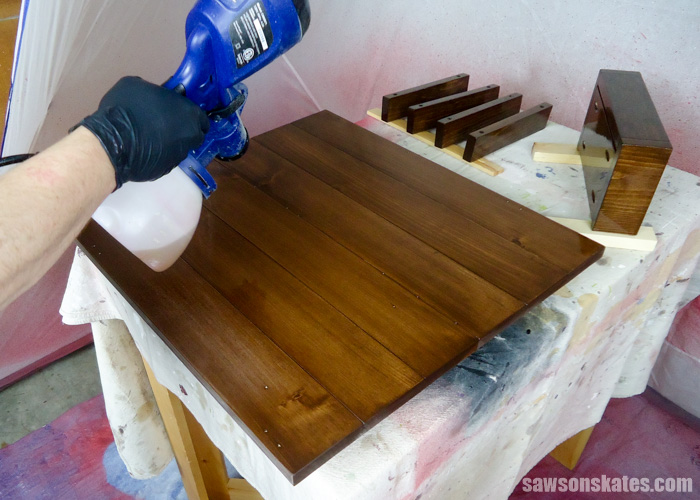
The results are in and I’m totally convinced… I will NEVER apply poly with a brush EVER again! The finish on the wall-mounted wine bar is amazing. The poly was quick to apply and the piece looks like it came from a factory.
There was no need to worry about bubbles, the application was sooo easy and the because the sprayer applies thin coats the finish didn’t look like plastic. If I’m going to apply poly I’m going to do it with a sprayer! Learn how easy it is to spray polyurethane here.
Final Thoughts
Poly has its place on floors, doors, trim and table tops, but for me, I prefer a hand rubbed look on my furniture projects. Who has time for finicky, difficult to apply finishes when you can make your own DIY finish that is easy to apply and gives amazing results? Make a batch of Bob’s Miracle finish for wood today!
If you found this information helpful, would you please pin it to Pinterest? I would really appreciate it!
More Like This:

Hi there – I’m Scott, a woodworking enthusiast and creator of Saws on Skates, a site I started in 2015 to share easy-to-follow tutorials, space-saving shop tips, and project inspiration for DIYers at any skill level. Learn more about my woodworking journey here.
That’s basically danish oil. I use it all the time too. The thing to remember is that with open grain woods, it can leave the grain open and the piece can collect dust in those grains and look dingy over time. If you do a couple coats of this finish, following up with a poly top is easy. Of coarse, you can use a grain filler too.
Thank you for your tips Bruce – I may give your poly trick a try!
Can this be used on top of painted finishes (like chalk paint)?
Hi Donna – I would only use this finish on raw wood or wood that has been stained.
Just one question, do you have to keep it mixed thoroughly? My mixture separates almost immediately. Every time I dunked my rag I mixed. Is that right? I got it on and so far it’s exactly what I want. Just seems weird…
Hey Shawn – That is weird. I’ve never had mine separate. Can you share pics or the names of the products you used, so we can try to figure out what’s going on?
Scott, here’s what I have. Maybe it’s because I used satin as they were out of clear when I bought it and I needed it right then. I tried to upload a photo but it wouldn’t let me. I used Klein Strip boiled linseed oil and paint thinner, and verathane satin spar urethane with uv protector. The BLO and Paint Thinner mixed but the urethane settles out almost immediately.
Hey Shawn – I think I may have figured this out. I googled “verathane satin spar urethane with uv protector” and it appears this product is water based. Check your container and see if it says water based. The spar urethane needs to be oil based, so if yours is water based, it would explain the “oil and vinegar salad dressing” separation you’re getting. Check it out and let me know – I’d love to figure this out!
Scott, thanks! You are correct! I completely didn’t think about oil and water but that’s it! The urethane is water based and I’ll be changing it today. I aporeciate all your help in figuring this out and will be using your method from now on with, hopefully, much greater success!
That’s awesome Shawn – glad we figured it out!
I’m going to give this a try. Thanks for sharing!
Have you ever tried the wipe on poly? It might be perfect for when you need more protection.
It is super easy to apply, dries fast for quick recoats. I only sand after the final coat is dry- just a quick wipe with very high grit paper. It’s like silk. The satin gives a nice finish too.
Hi Jackie – I haven’t tried wipe on poly, but it sounds like I need to give it a try. Thank you for the recommendation!
Can I use this on painted surfaces?
Hi Sharon – I wouldn’t use this on painted surfaces. It works best on raw wood or wood stained with an oil based stain.
You mentioned the three ingredients but unless I missed it I didn’t see how much of each product.
Is it equal parts of each?
Hi Ken – Thank you for stopping by. Yes, it’s equal parts of each ingredient. Good luck!
Hi, I agree on how poly looks with several coats. But, what about the hard protection it provides on the floor vs the product you use?
Ken
Hey Ken – Good question… In the post, I mentioned, “It’s (poly) great for floors, doors, woodwork around windows and doors and furniture that will get lots of abuse like dining tables and kitchen cabinets.” The DIY finish is great for DIY furniture projects where you might need as much durability.
We’re only using water-based staining on our custom build urniture from general Finishes. Easy to use and great looking. You can mix and match everything with only 10 are colors.
Top finish are then 2 layer of water based polyurethane from same company. No roblems, easy use fast drying and great looking.
I have not had time to use this yet, but went to Lowe’s today to see what I could find. Yup they have all the ingreds so I purchased and will give a try as I have a couple of projects in mind. Thanks for the tip
Does this provide a water tight seal? Looking for a product to finish our bar top on a rather large bar. Was looking at epoxy but have never used it before.
Hi Nicole – I wouldn’t recommend Bob’s Miracle Finish for an area that is going to see as much moisture as a bar top. I think the epoxy might be a better bet. You might even want to look at spar varnish to see if that would protection you would need for a bar top.
I have made many pieces of furniture over a sixty year period and I have found satin gloss polyurethane to be a great finish, The finishes you put on with a cloth are very time consuming and add little protection .