
My Toolbox Essentials: Must-Have Gear For Every DIYer
Is your toolbox ready for any project? Discover the essential tools every DIYer needs. From simple fixes to major repairs, I’ve got you covered.

Wondering what to keep in your toolbox? Having the right tools on hand can make all the difference. I’m giving you a peek inside mine, spotlighting the essential gear every DIYer needs for handling big and small projects. From screwdrivers to speed squares, my curated list will allow you to tackle any project confidently.
This article contains affiliate links. If you purchase from these links, I may earn a small commission at no additional cost to you. Visit my site policies for more information.
My Toolbox Checklist
Over the years, I’ve learned that a well-stocked toolbox is your secret weapon to any successful DIY project. It’s your trusty companion empowering you to tackle any task, from hanging a picture to building a backyard deck.
Before I dive into my tools and the toolbox I’ve chosen to organize them, I want to share an important reminder. You don’t need to rush out and buy everything at once. You don’t even need to buy everything new.
I’ve been building my collection for nearly three decades, and what you see here is the result. Some tools are new, others I’ve found at garage sales, and a few were gifts or inherited from my grandfather. The key is to buy what you need when you need it.
Safety Gear
I always make sure to keep myself safe while I’m working. While I store my personal protective equipment (PPE) in my workshop and grab it when I head out, you might find it more convenient to keep it in your toolbox. That way, it’s always ready to go.
- Safety Glasses: These are a must-have to shield your eyes from flying debris and sawdust.
- Ear Protection: Power tools can be surprisingly loud. Earplugs or earmuffs can significantly reduce noise exposure, preventing hearing damage.
- Dust Mask: A good dust mask or respirator can protect your lungs from harmful particles, especially when working with wood, drywall, or spray painting.
Screwdrivers
I know, I know, screwdrivers are a bit of a no-brainer. But trust me, having the right one can save you a ton of time and frustration. You’d be surprised how often a simple screw can throw a wrench in your DIY plans.
So, what kind of screwdrivers should you have? Well, let’s start with the basics:
- Phillips-head: These are the ones with the cross-shaped tip.
- Flat-head: These have a flat, slotted tip.
Of course, you’ll also want to have a variety of screwdriver sizes. I stock my toolbox with at least one small, medium, and large screwdriver of each type.
Recently, I had to change a thermostat for a friend and it had those teeny-tiny screws. I didn’t have a screwdriver small enough to reach them, so I ended up using the blade from my oscillating tool, lol. After that little adventure, I added a mini precision screwdriver set—the kind you’d use for eyeglasses—to my toolbox.
In addition to a few I inherited from my grandfather, I’ve had a Craftsman screwdriver set similar to this one for about twenty years. A good screwdriver set will come with a variety in different sizes and types making it easy to find the right tool for the job, no matter what you’re working on.
Hammer
Alright, here’s another one that might seem obvious, but a hammer is a must-have for any DIYer. Whether driving a nail or trying to remove one, a claw hammer is an essential tool.
Tape Measure
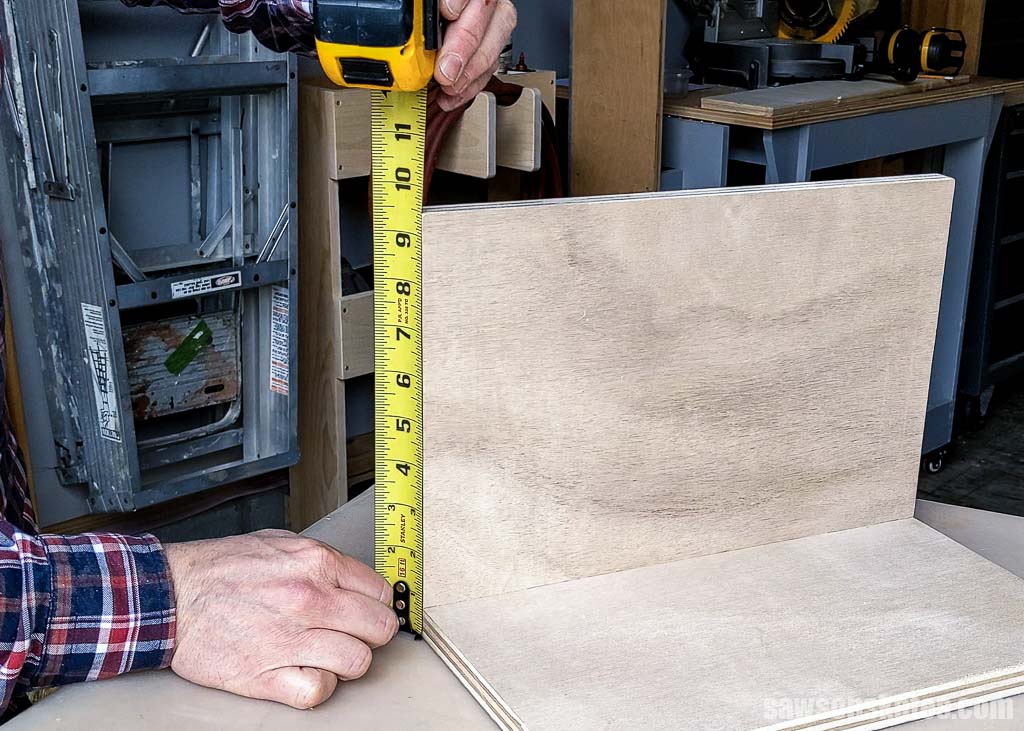
Okay, I know, another obvious one. But a good tape measure is required for almost any DIY project. Whether measuring for a new bookshelf, hanging a picture, or laying out a floor plan, a tape measure is a must-have tool.
Related: How to Use a Tape Measure Correctly (Tips for Success)
The Stanley FatMax tape measure is my go-to because it’s durable, features easy-to-read numbers, and has a reliable locking mechanism. Plus, it fits nicely in my hand, making it an excellent tool for any measuring task.
Pry Bar
A pry bar is often overlooked, but it’s a versatile tool that can save you time and frustration. I keep a 12-inch pry bar in my toolbox for:
- Removing stubborn nails: It’s perfect for pesky nails that are too stubborn for my claw hammer.
- Separating trim boards: Pry boards such as door, window, and floor molding away from the wall for a renovation project.
- Leveraging heavy objects: Use the pry bar to lift heavy objects, like a door, back onto its hinges.
Wrenches
A good set of wrenches is essential for any DIYer. I keep three main types in my toolbox:
- Adjustable Wrench: Also called a crescent wrench, this versatile tool can handle a range of nut and bolt sizes. It’s great for those odd jobs where you don’t have the exact size wrench you need.
- Combination Wrench Set: This set includes open-end and box-end wrenches, providing a secure grip on fasteners. I recommend having both an SAE and metric set.
- Allen Wrench Set: These small, L-shaped wrenches are perfect for tightening screws with hexagonal sockets.
Pliers
Pliers are essential tools for gripping, cutting, and bending various materials. I keep a variety of them in my toolbox to handle different tasks:
- Needle-nose Pliers: These slender pliers are perfect for gripping small objects, bending wire, and reaching into tight spaces.
- Tongue-and-groove Pliers: Also called by the brand name Channel Lock, these versatile pliers can grip round objects in various sizes or with odd shapes.
- Vice Grips: These powerful pliers can lock onto objects with a strong, vice-like grip, making them helpful in holding heavy components or breaking stubborn nuts and bolts.
Speed Square
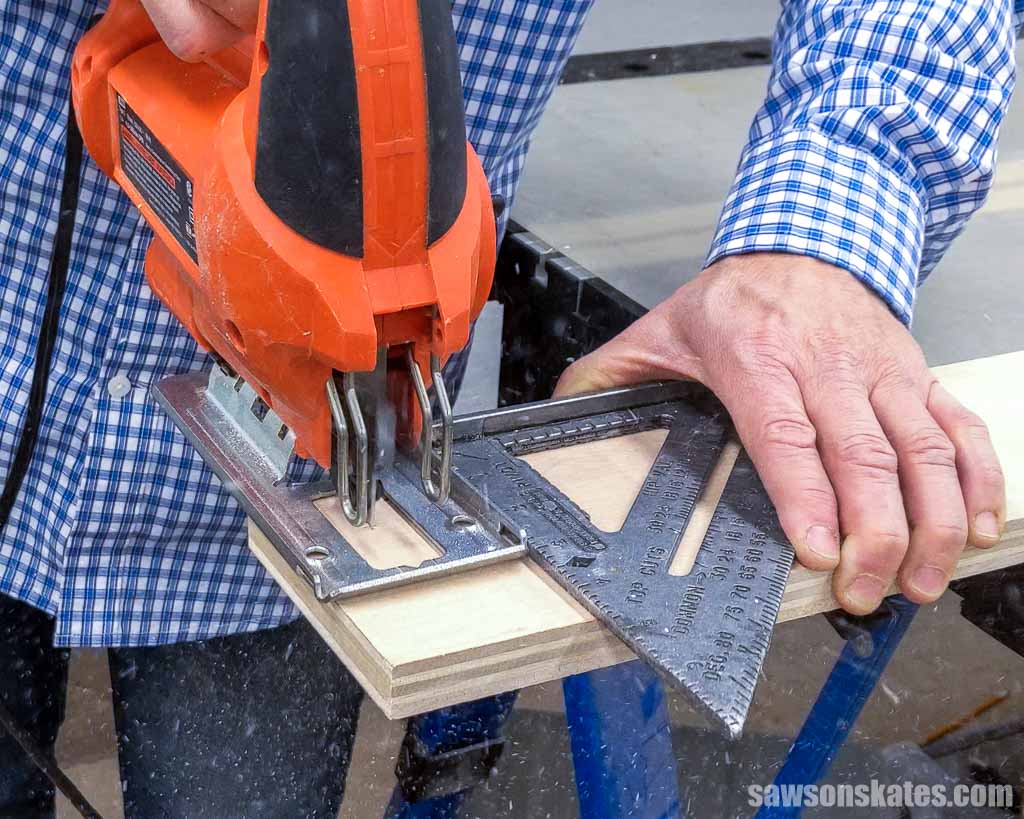
I can’t imagine my toolbox without my speed square. This versatile tool is excellent for marking straight lines and angles. I also use it as a guide for making straight cuts with my jigsaw and circular saw.
Related: Jigsaw vs Circular Saw (Differences, Uses & Which to Buy)
Utility Knife
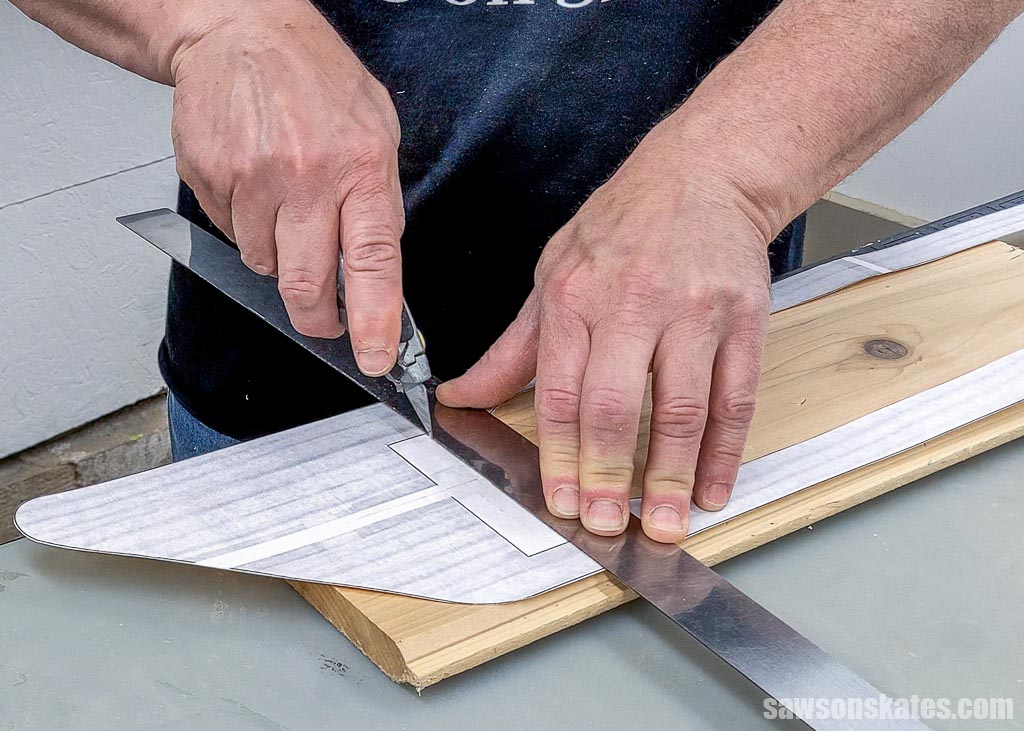
A good utility knife is a must-have for any DIYer. I use this versatile tool for cutting various materials, from cardboard and plastic to drywall and carpet. Featuring a quick change blade and storage for extra ones, I always keep this utility knife in my toolbox.
Level
Whether hanging a picture or installing a shelf, a level is essential for achieving accurate results. I prefer a 9-inch torpedo level for my toolbox because of its compact size. It’s perfect for checking both horizontal and vertical surfaces.
Stud Finder
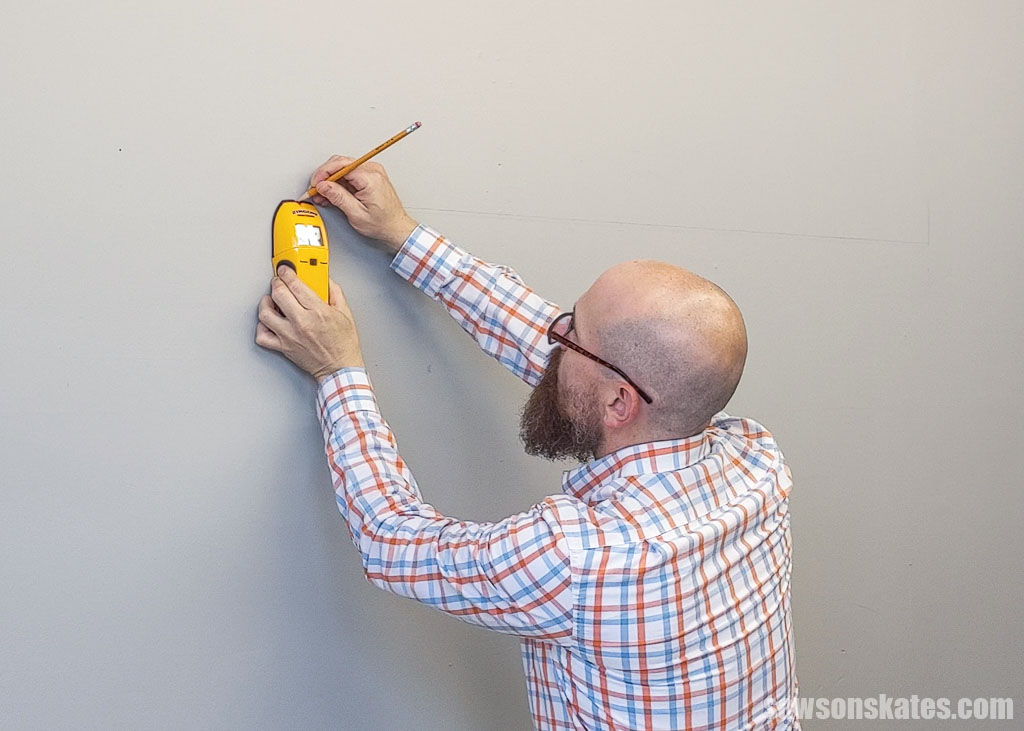
A stud finder is handy for locating the wooden studs behind drywall, which is important for hanging objects like shelves, cabinets, or French cleats. I’ve found that a stud finder can save a lot of time and frustration. Just scan the wall, and the device will beep when it detects a stud.
Related: How to Make French Cleat Tool Storage Wall
Hack Saw
While a hack saw isn’t typically my first choice when it comes to cutting tools, I keep a 6-inch one in my toolbox because it’s compact, versatile, and can handle a variety of materials such as metal, plastic, and wood.
Pocket Hole Jig
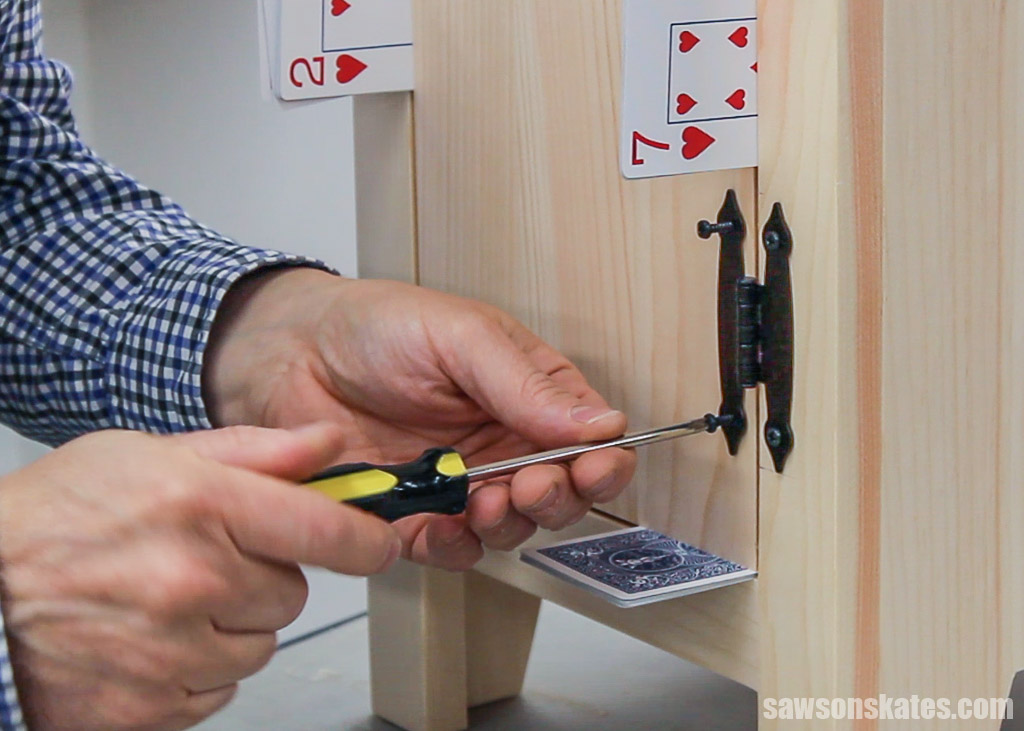
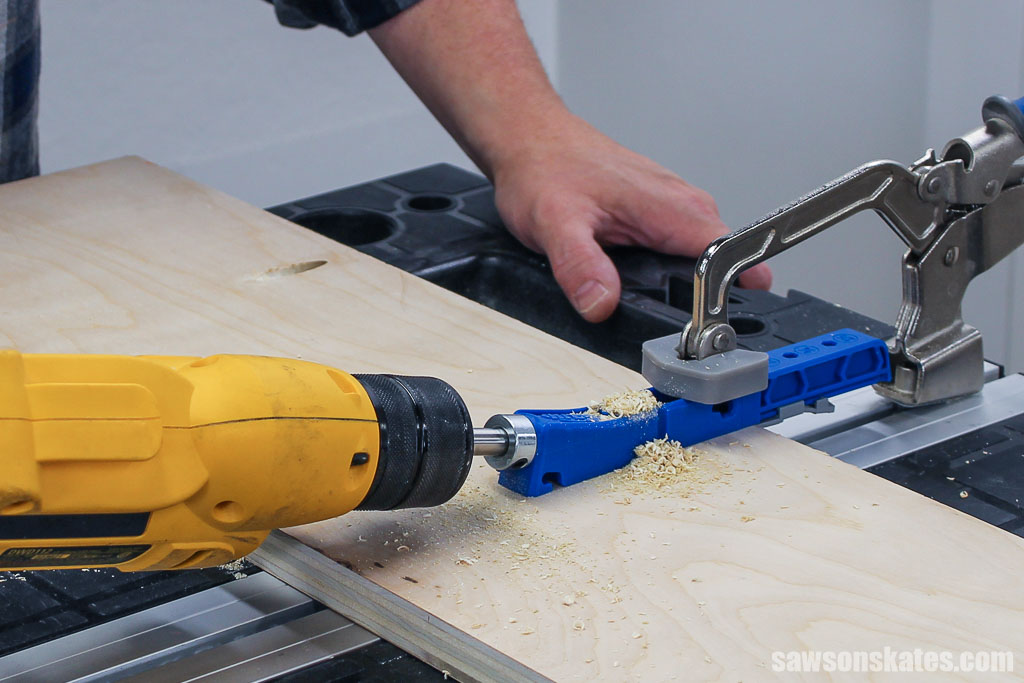
A pocket hole jig is a game-changer for woodworking projects, allowing you to create strong, concealed joints by drilling angled holes into workpieces. I’ve used mine to build everything from bookshelves to cabinets, but I often use the Kreg Jig 320 in my toolbox to make repairs.
Related: Which Kreg Jig Should You Buy? (Here’s the Answer)
Wood Glue
Wood glue is a staple in my toolbox. I use it for various projects, from furniture building to repairing broken items.
TIP: Don’t leave your toolbox where it could freeze because it can ruin wood glue, rendering it useless.
Miscellaneous Items
While not always the flashiest tools, I always keep a few miscellaneous items in my toolbox.
- Pencils: A simple pencil is essential for marking cuts and measurements.
- Duct tape: The ultimate repair solution, duct tape is always handy for quick fixes.
- Zip ties: These versatile fasteners are great for bundling cables or securing loose parts.
- Wire nuts & electrical tape: Handy for quick electrical fixes, replacing fixtures, or tidying up connections safely.
- Teflon tape: Ideal for sealing threaded plumbing connections and preventing leaks.
These seemingly small items can often be the key to completing a project efficiently and effectively.
What Toolbox I Use
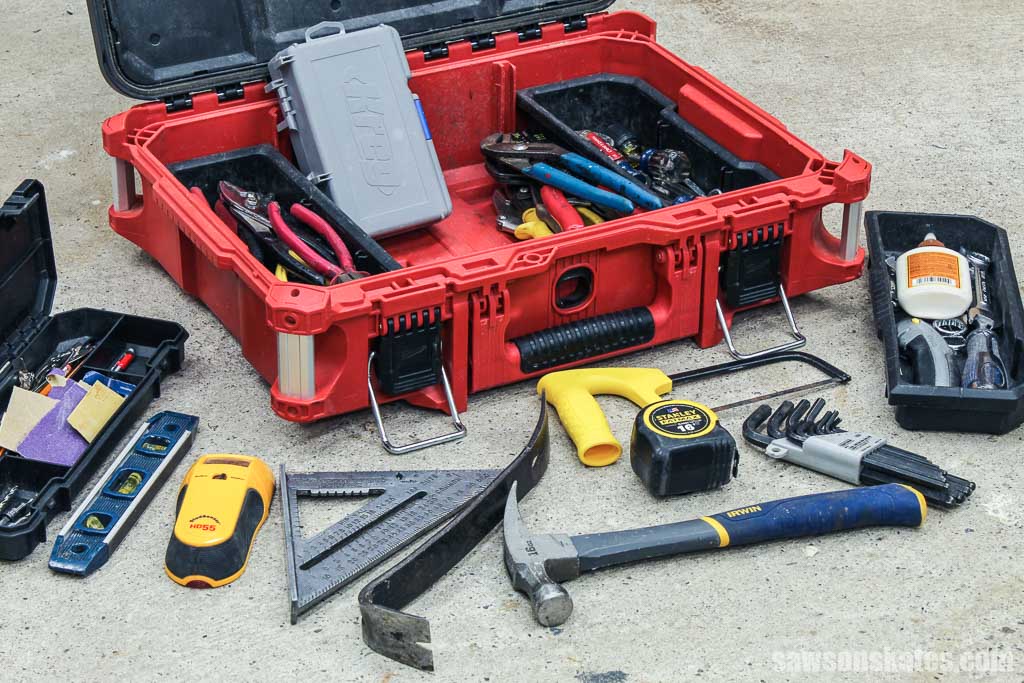
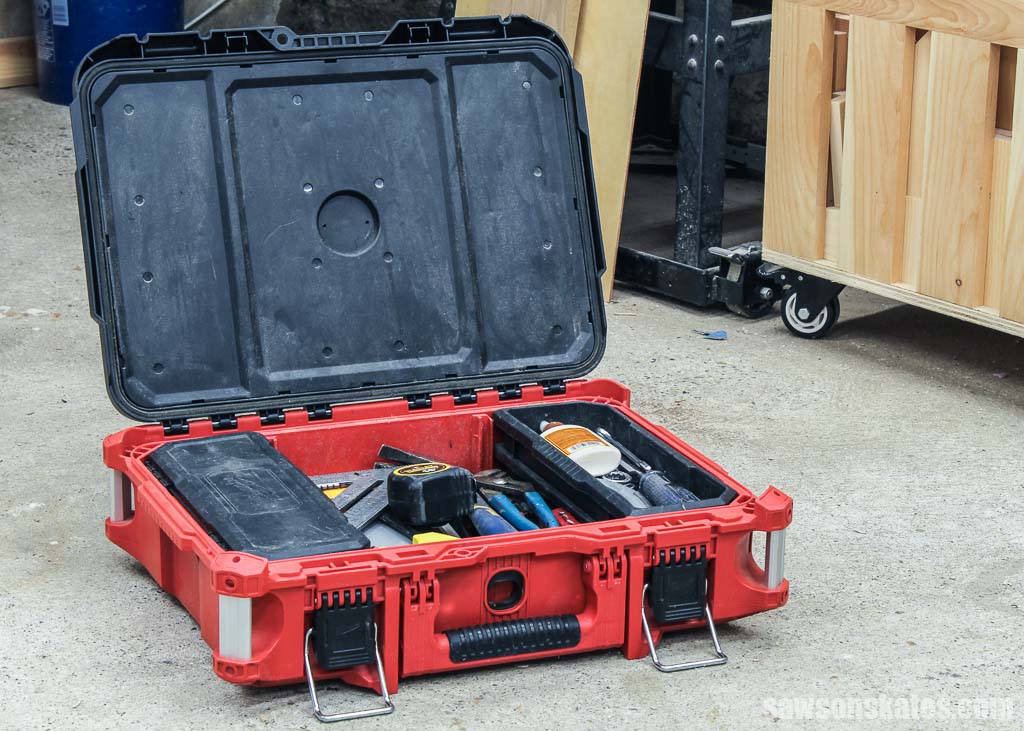
I’m currently using a Milwaukee Packout Toolbox. It’s a beast, incredibly sturdy and loaded with storage compartments. It’s perfect for organizing all my tools and accessories.
However, it does have a few drawbacks. It’s pretty expensive, and even if it’s empty, it’s quite heavy. And it’s really heavy when it’s filled with tools. While I appreciate its durability, I would research competitor options before purchasing another one.
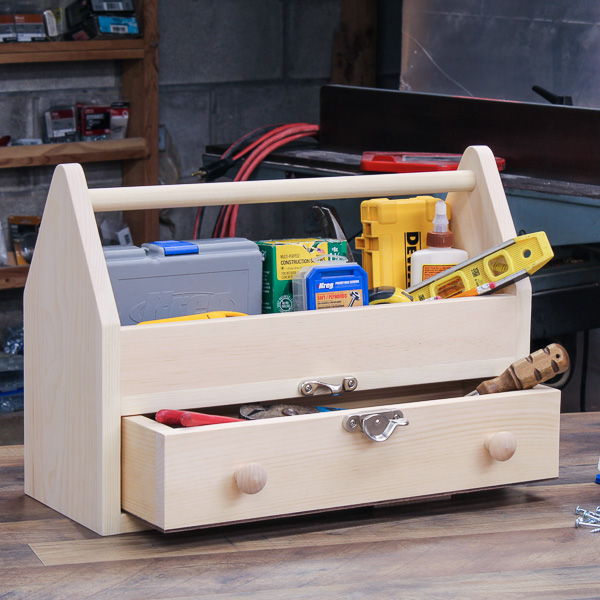
Want to build your own toolbox? My woodworking plan for this wooden toolbox with a drawer is a fan favorite.
Additional Tips for Outfitting a Toolbox
While I’ve shared the tools I rely on most, remember to tailor your toolbox to your specific needs and hobbies.
Think about the types of projects you typically work on and the tools you use most frequently. You don’t need to fill your toolbox with every tool imaginable. The key is to have a well-organized toolbox that contains the tools you use most often.
Final Thoughts
Selecting the right tools and keeping them organized can save time and reduce frustration. A well-stocked toolbox should suit your specific needs. So, take the time to curate a collection of tools that empower you to tackle any DIY challenge confidently.
Thank you for stopping by. If you enjoyed this tutorial, would you please take a moment and pin it to Pinterest? I’d really appreciate it!
Recommended For You
Pin This For Later

Hi there – I’m Scott, a woodworking enthusiast and creator of Saws on Skates, a site I started in 2015 to share easy-to-follow tutorials, space-saving shop tips, and project inspiration for DIYers at any skill level. Learn more about my woodworking journey here.
Great article for “mobile” handymen. Thank you.
You’re welcome. I’m glad you enjoyed it!