
Why You Should Stop Staining Pine
Why staining pine is frustrating, what actually works, and when it’s better to stop fighting the wood and let pine look like pine.
This article contains affiliate links. If you purchase from these links, I may earn a small commission at no additional cost to you. Visit my site policies for more information.
I recently read a post in a Facebook woodworking group that hit close to home. The gist of it was this:
If you’re building something out of pine or oak, let it be pine or oak. Apply a top coat, use it, and let time do the rest. Over the years, light, air, and wear will deepen the color naturally — often in a way that looks better than anything you could force with stain.
The post questioned why so many woodworkers spend so much effort trying to make one species look like another. Why take perfectly good wood and try to make it look like walnut or mahogany, especially when staining introduces extra work, frustration, and the risk of ruining a project?
Reading it reminded me of something my aunt — a retired furniture refinisher — used to tell me. Whenever I complained that I couldn’t get a stain to match the color I had pictured in my head, she’d say, “If you want that color, then use that wood.”
And to some extent, I agree. Let me explain.
My Long History of Fighting Pine
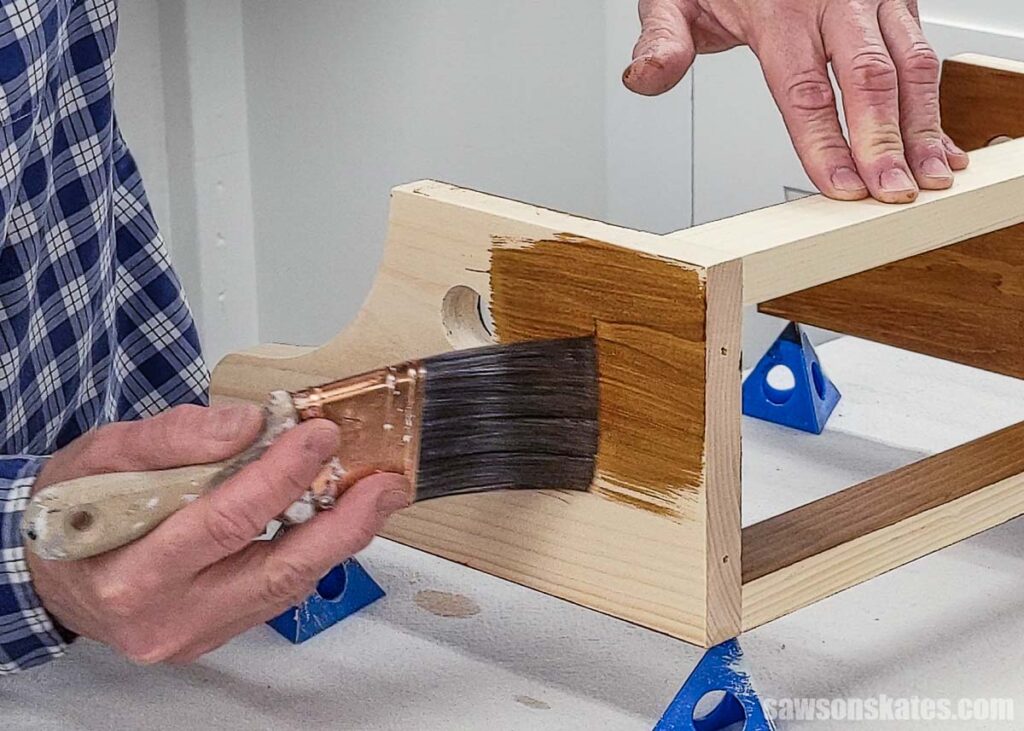
I work with pine a lot, and I’ve spent plenty of time trying to make it darker or warmer — anything other than pale, sometimes yellowish white. If you’ve ever tried staining pine, you know how challenging that can be. It absorbs unevenly, turns blotchy, and often ends up looking more like a Rorschach inkblot test than the rich color you were aiming for.
After years of trial and error (and more than a few mistakes), I’ve found a few approaches that work for me.
What’s Worked for Me (Sometimes)
If you’ve stained pine before, you already know how blotchy it can get. The usual recommendation is to apply a store-bought pre-stain conditioner to help even things out. I tried that route, but in my experience, while conditioners reduced the unevenness, they also made the final color lighter than expected.
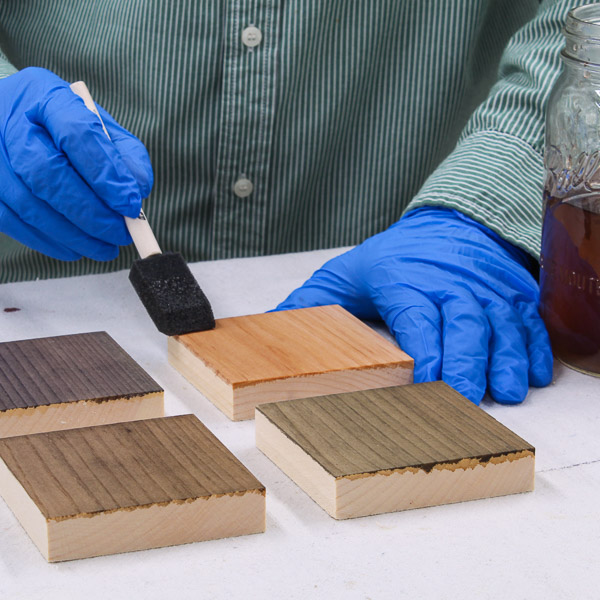
I’ve had better luck using a tea or coffee stain before applying an oil-based stain, which reduced blotchiness and got the color closer to what was pictured on the can. I’ve shared my exact coffee stain process in a full tutorial, including ratios, application tips, and what to expect.
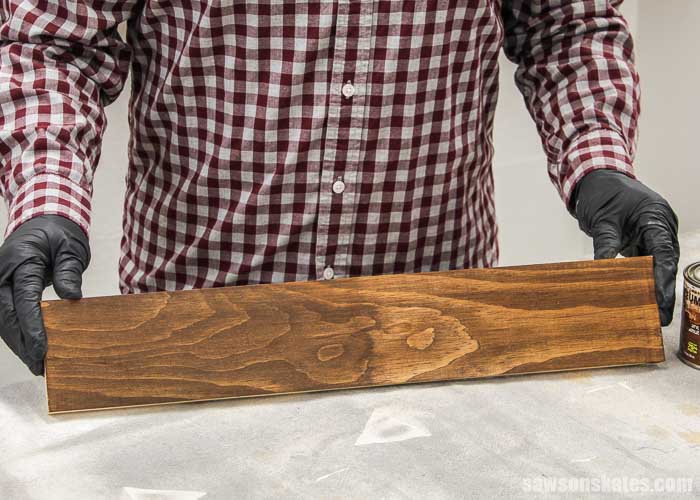
I’ve also used a steel wool and vinegar mixture to oxidize pine. The transformation is almost instant and feels a little magical. Does it suddenly look like walnut or mahogany? Not really. To me, it just looks… darker. And sometimes that’s all I wanted. I’ve written more about the steel wool and vinegar process, including what to expect and where it tends to work best, in this tutorial.
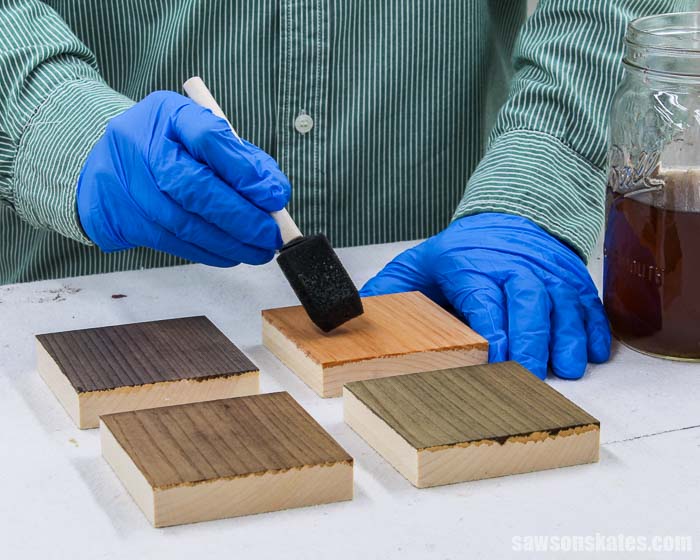
More recently, I’ve used Varathane’s Aged Wood Accelerator. It’s easy to apply and gives pine a consistent brown tone. I wouldn’t say it makes the wood look “aged” or like a specific species, but if your goal is brown instead of white, it’s a decent option. I tested it on five different wood species and shared my full thoughts in this dedicated review if you’re curious how it compares.
The Real Problem with Stain Expectations
So yes—if you want your pine projects to be darker, there are ways to do that. But will you ever convincingly make pine look like another species? No. The grain will always give it away. And will you make mistakes or ruin a project along the way? Absolutely. I always recommend testing stains on scrap pieces before applying them to your project, but that’s a rant for another day, lol.
Here’s where I think a lot of frustration comes from: staining isn’t like painting.
When you choose a paint color, you expect it to match the swatch — and most of the time, it does. Stain doesn’t work that way. The wood itself plays a huge role in the final color, and no two boards (or species) absorb stain the same way. I think a lot of DIYers, especially beginners, expect paint-like results and feel blindsided when stains don’t behave the same way.
So What Should You Do?
If you truly want a specific color — like a deep walnut tone — the best option is still to use that wood. But I also understand that hardwoods aren’t always in the budget. I work with pine for that very reason, and I’d never tell someone to spend beyond what makes sense for their wallet.
If changing the wood species isn’t an option but your heart is set on a stain color, the key is to adjust your expectations. The result may be close, but it probably won’t be exact. Wood is a natural material, and part of working with it is accepting that it won’t always cooperate.
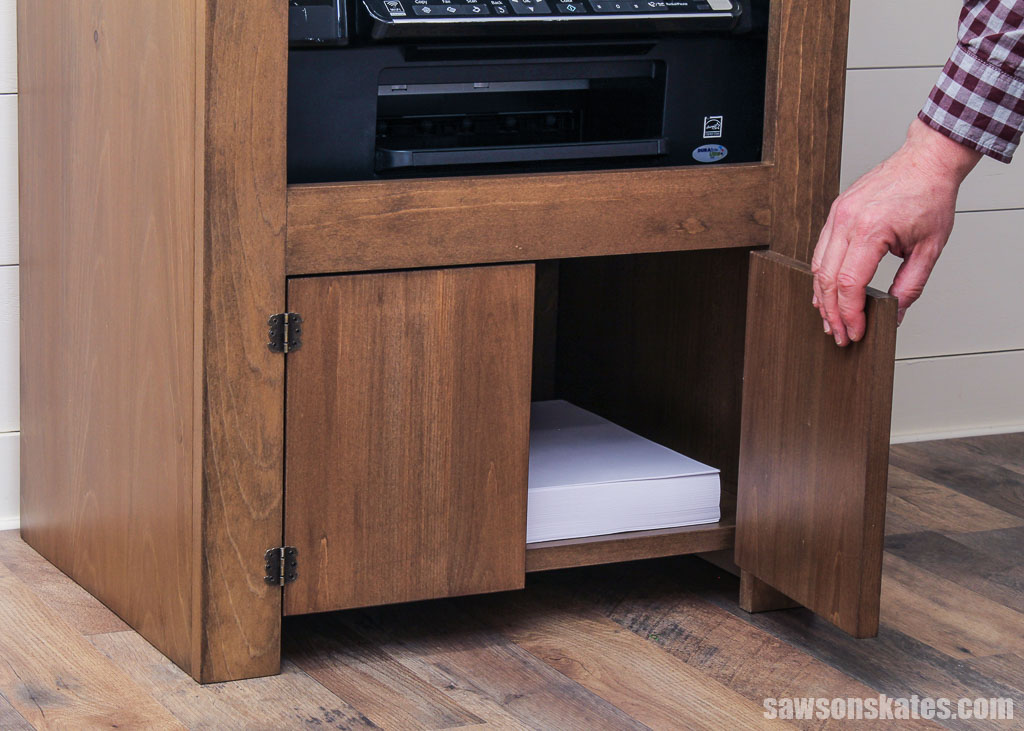
And the third option — the one I’ve been leaning into more lately — is to stop fighting it altogether. Let pine look like pine. Finish it with a clear coat. Use it, live with it, and let time do what it’s always done best.
If you want to see what that looks like in real projects, here are a few I’ve built and finished with just a clear coat:
- Boot rack
- Picture frame with shelf
- Phone stand
- Dog bowl stand
- Bedside table
- Wall-mounted kitchen shelves
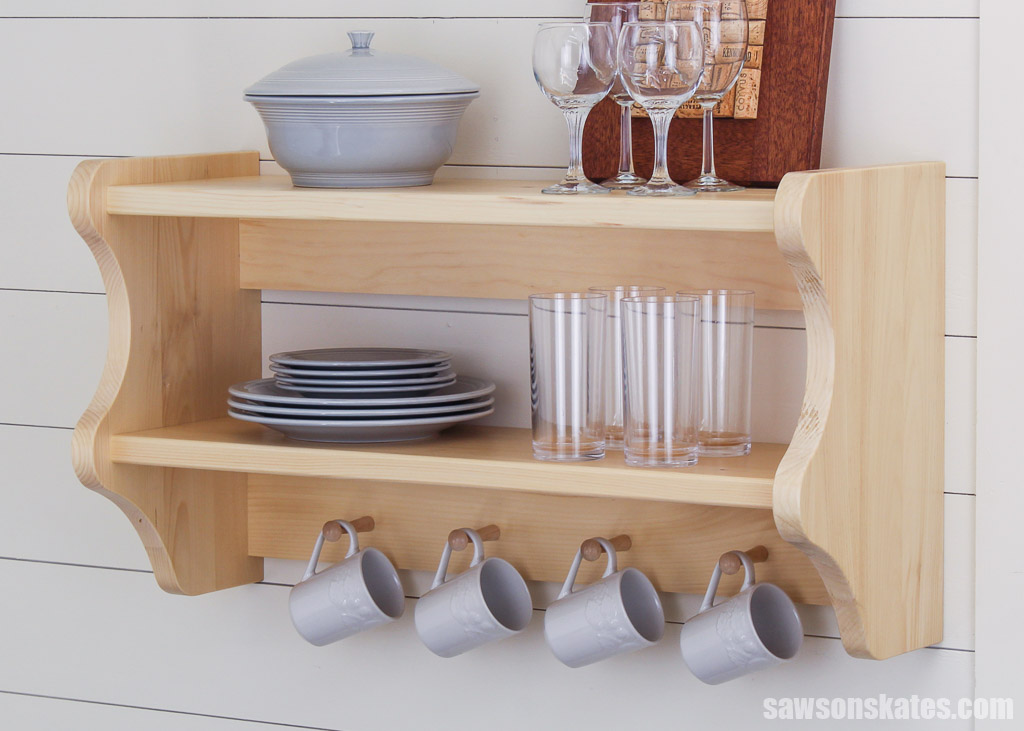
You might be wondering what I typically use for a topcoat when I leave pine natural.
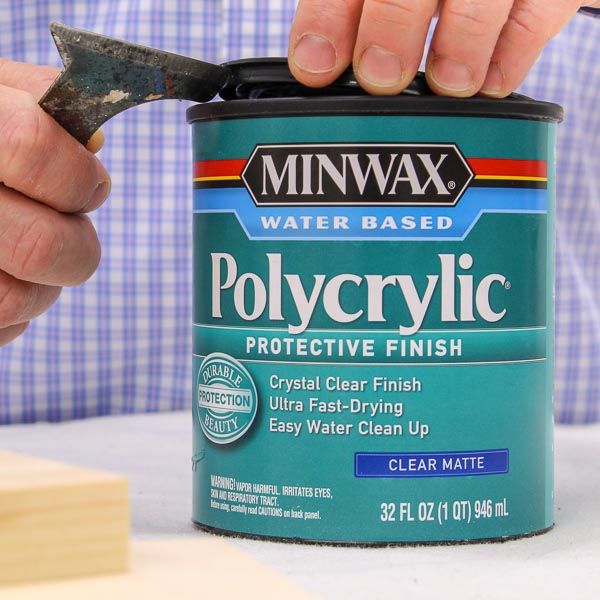
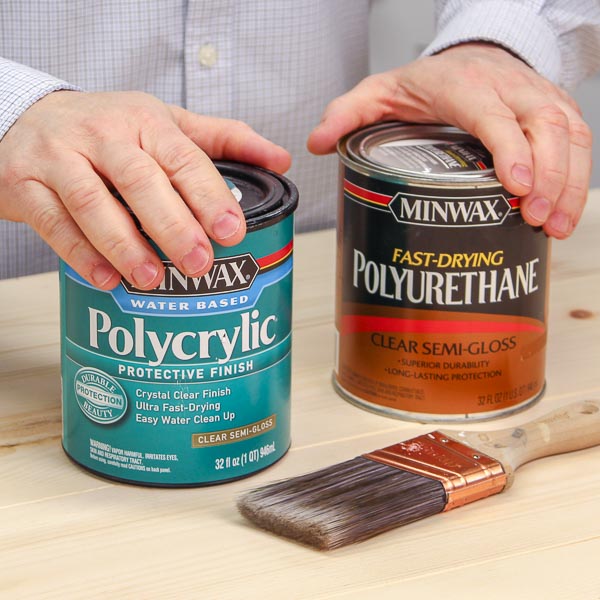
For small home decor pieces that don’t see a lot of abuse, I usually reach for Polycrylic. It’s easy to work with and dries quickly. I’ve shared exactly how I apply it — along with common mistakes to watch out for — in this post.
That said, my favorite topcoat isn’t one you’ll find everywhere.
A reader recommended PolyWhey by Vermont Natural Coatings, and it’s been fantastic. I like the way it applies, the durability, and that it cleans up with water. It’s made from whey — a byproduct of cheesemaking.
The downside is availability. I can’t buy it locally, so I usually stock up when I travel to help a friend work on his vacation rentals. And depending on where you live, buying it online can make it cost-prohibitive. I’ve written more about my experience with it here.
Of course, you could always paint your projects — but that’s a debate for another time.
Another Reason I’ve Stepped Away from Stain
Another reason I’ve been leaning toward leaving pine natural is I’m trying to reduce the amount of harsh chemicals I use in my shop. I often have to finish projects indoors, and I don’t want strong smells lingering around for days.
Oil-based stains are effective, but they’re also smelly and combustible — and that combination isn’t something I love having in my workspace.
I could switch to water-based stains, but to me, they tend to look more like paint sitting on top of the wood rather than a finish that actually absorbs into it.
For similar reasons, I’ve moved away from oil-based topcoats whenever I can. The smell and the fire risk just aren’t worth it for me. For example, I’ve had good results with the Varathane Aged Wood Accelerator, but one of its biggest drawbacks is that it needs to be topcoated with spray lacquer. Even with a respirator, that’s one of the stinkiest finishes to work with.
Keeping pine natural and using less-toxic finishes have made the process more enjoyable — and a lot less stressful.
Final Thoughts
If staining pine has ever left you frustrated, you’re not alone. It’s a difficult wood to control, and no amount of effort will make it behave like a different species. At some point, it helps to stop struggling against the wood and start working with it instead.
Whether that means adjusting your expectations, choosing a different material when you can, or simply letting pine look like pine, you’ll likely enjoy the process — and the result — a whole lot more.
Recommended For You
Pin This For Later

Hi there – I’m Scott, a woodworking enthusiast and creator of Saws on Skates, a site I started in 2015 to share easy-to-follow tutorials, space-saving shop tips, and project inspiration for DIYers at any skill level. Learn more about my woodworking journey here.
A worker at Rockler said Minwax uses too much water in stains and finishes, not to mention excessive grain raising. I use General Finishes water based, non-toxic products with no grain raising on pine without problems at least 10 years. Don’t have to sand after General Finishes staining. General Finishes products are sold at Rockler and Woodcraft stores. Recently, I started using SamAN water-based stains good, too and no problems you mentioned with pine. I have a chemistry degree and worked as a chemist for a while working with dyes, inks and solvents in R&D for a company. I understand how dyes and solvents affect results.