
DIY French Cleat Jigsaw Holder (& Blade Storage)
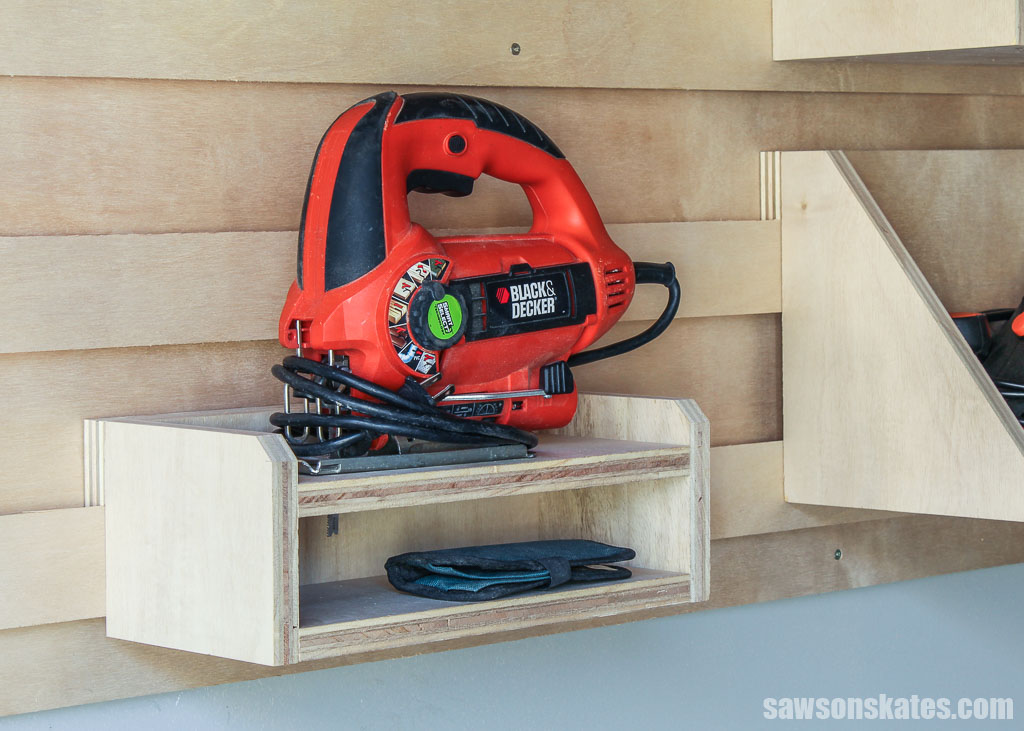
Is your jigsaw hogging up workbench space? This DIY French cleat holder keeps it organized and ready to grab. Make one today with these plans.
What Should I Build Next?
That's the question I help answer.
Every week, I send woodworking ideas to 17,000 DIYers who love building things.
You'd fit right in.
Let’s face it. Jigsaws have an awkward shape, making them tricky to store neatly in a toolbox or on a shelf.
This DIY jigsaw holder is a clever solution that keeps your saw organized and ready to tackle any cutting project. Plus, it uses the reconfigurable French cleat system for easy mounting and accessibility. I’ll show you how to build this space-saving wonder in just a few simple steps.
Table of Contents
This article contains affiliate links. If you purchase from these links, I may earn a small commission at no additional cost to you. Visit my site policies for more information.
Inspiration for This French Cleat Jigsaw Rack
After renovating my garage, I was left with a blank space – the prime spot for a French cleat wall. I have a handful of tools I only use now and then, not enough to keep in my cramped workshop. This new wall space was the perfect answer – more storage, especially for those less-used tools.
Related: How to Make a French Cleat
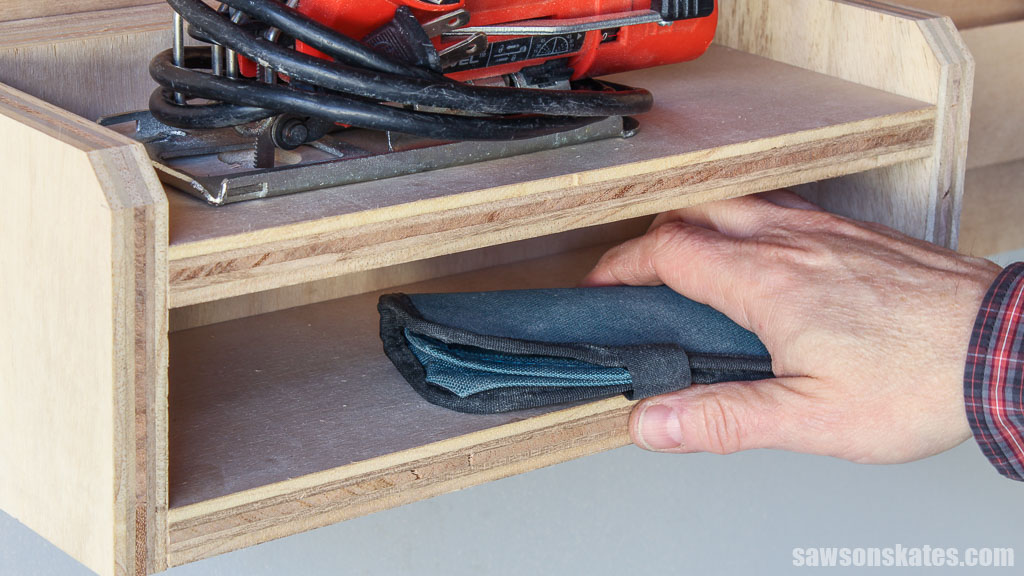
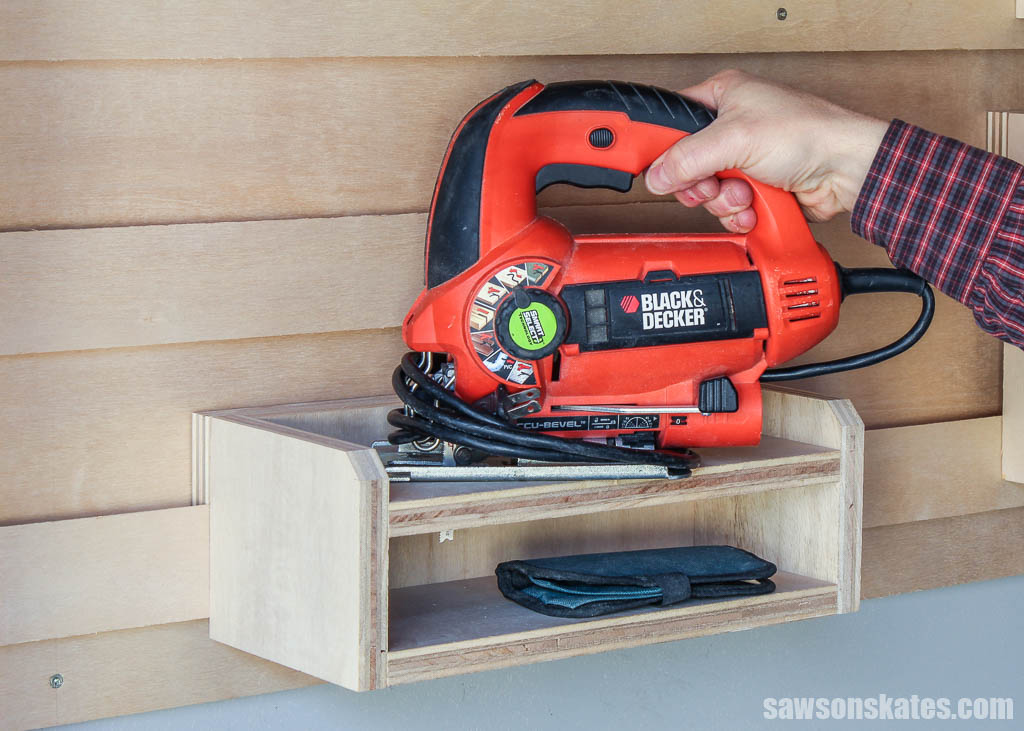
To complete the setup, I built this jigsaw holder with a shelf for storing extra blades.
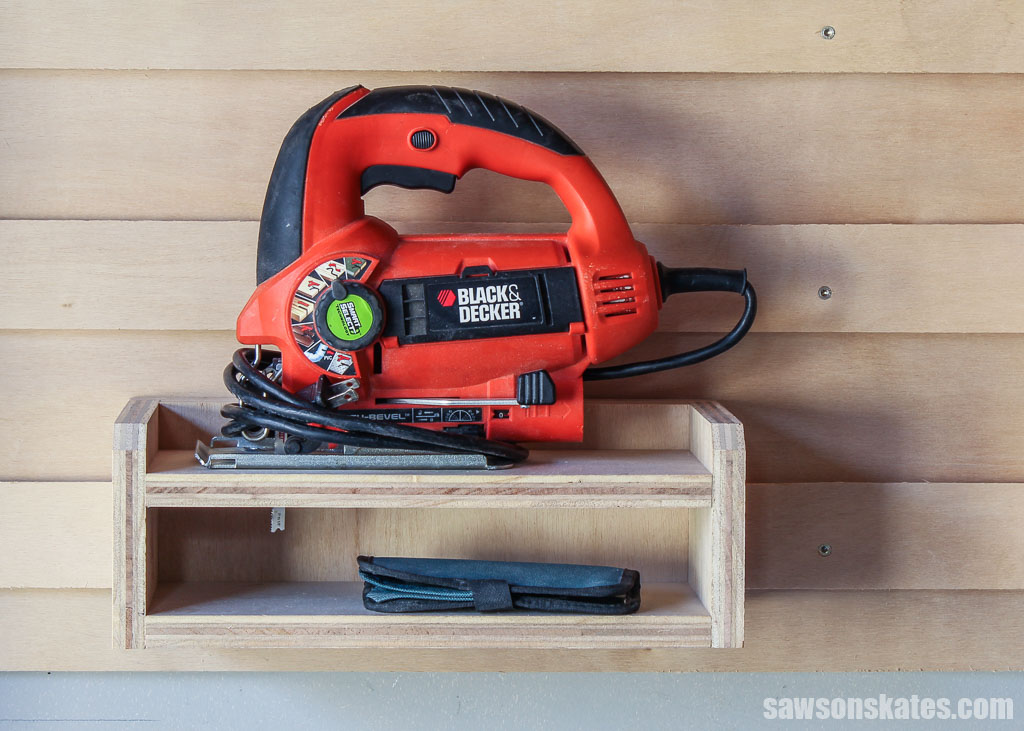
It’s a space-saving solution that keeps my jigsaw handy and blades organized.
You may also enjoy this French cleat tool storage shelf.
What Wood Should You Use?
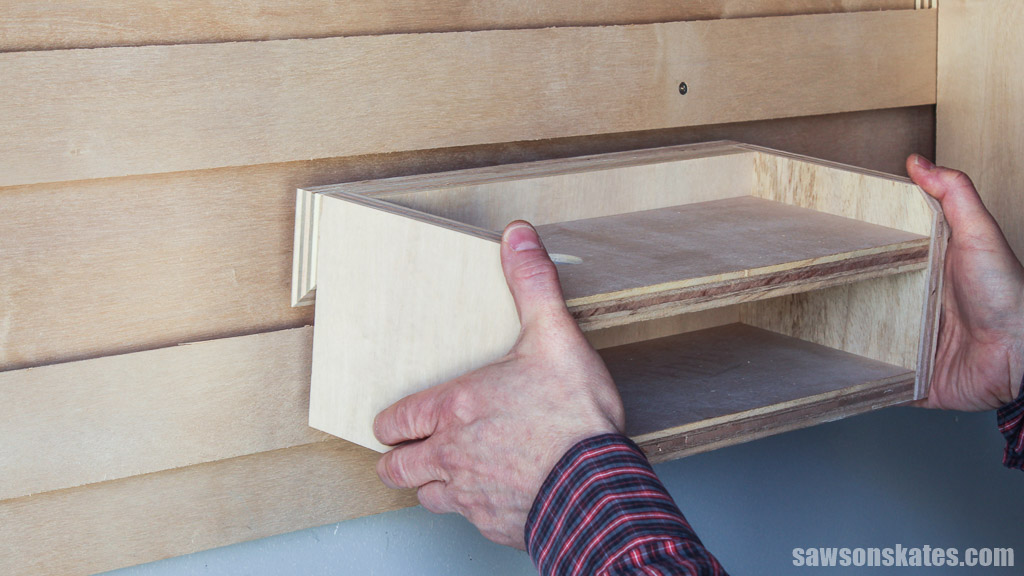
While plywood isn’t my usual go-to, I had some scraps left from building my garage’s French cleat system and shelves, which was the perfect material for making this jigsaw rack.
What Tools Do You Need?
I used four tools to make my jigsaw holder.
- Table saw: I used my table saw to rip the plywood to width, but you could use a circular saw and Kreg Rip-Cut instead.
- Miter saw: I used my miter saw to cut the jigsaw holder’s parts to length.
- Pocket hole jig: I used pocket hole joinery to assemble the holder.
- Drill: I used my drill to make the pocket holes and drive the pocket hole screws.
How to Make DIY French Cleat Jigsaw Holder
Printed Plan
Get the PDF plan here (includes detailed instructions, measurements, and bonus tips)
Materials
- Wood (per the printed plan)
- 1-¼” Pocket Hole Screws
- 1-¼” Wood Screws
Tools
- Tape Measure
- Kreg Multi-Mark
- Table Saw or Circular Saw and Kreg Rip-Cut
- Pocket Hole Jig
- Drill
- Right Angle Drill Attachment
- Countersink Drill Bit
- 1″ Forstner Bit
Step 1. Make the Sides
All the parts for this project were cut from ¾” plywood. To save on materials, I used scraps left over from making my French cleat tool shelf.
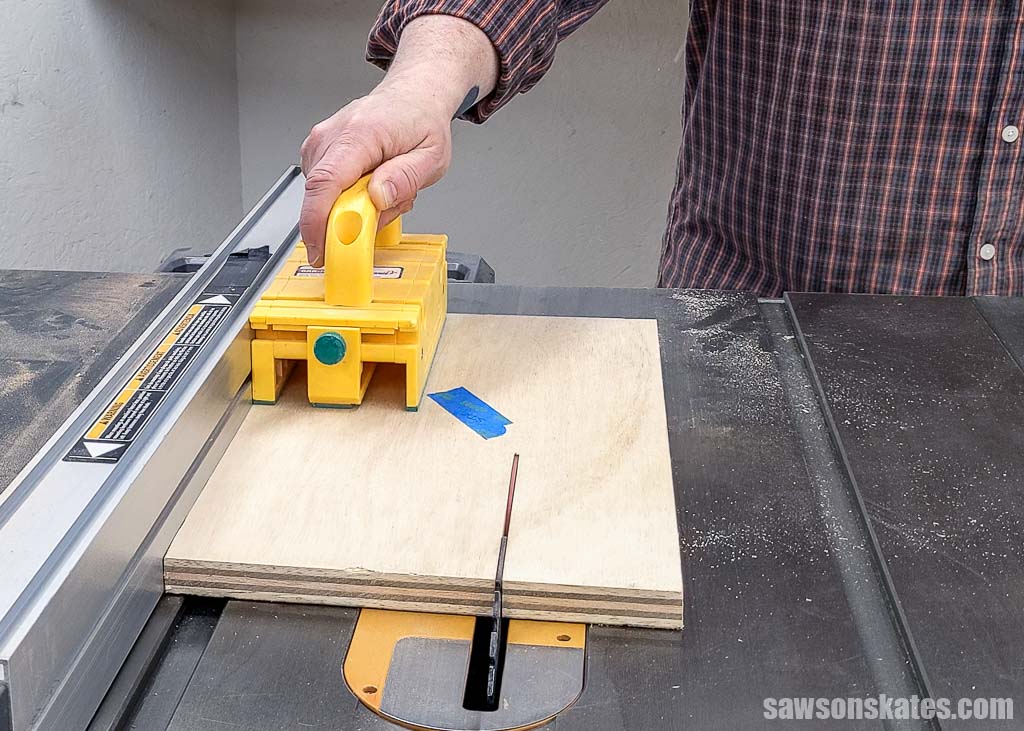
To get started, I ripped a piece of plywood to width using my table saw.
Related: 21 Table Saw Safety Rules (& Mistakes to Avoid)
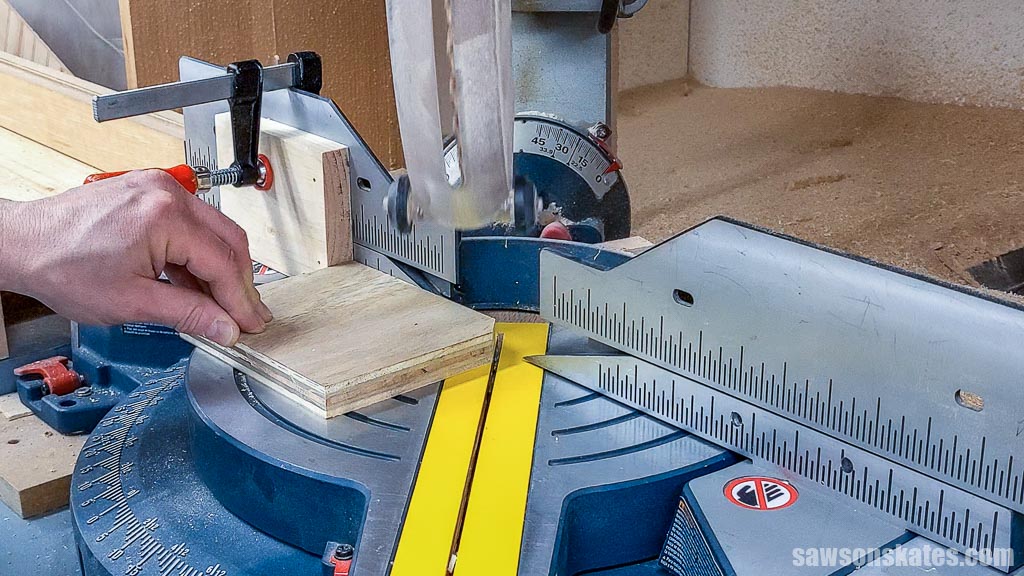
I cut two pieces to length for the sides using my miter saw.
Following the diagram in the printed plan, I marked a 45-degree angle on the side.
After adjusting my miter saw to 45 degrees, I made the cut.
TIP: I set a stop so I could repeat the cut on the second side.
Step 2. Attach the Back
Using my table saw, I ripped a piece of plywood to width for the back.
I moved on to the miter saw to cut it to length.
TIP: Since the back and shelves are the same length, I set a stop, ensuring the cuts are identical.
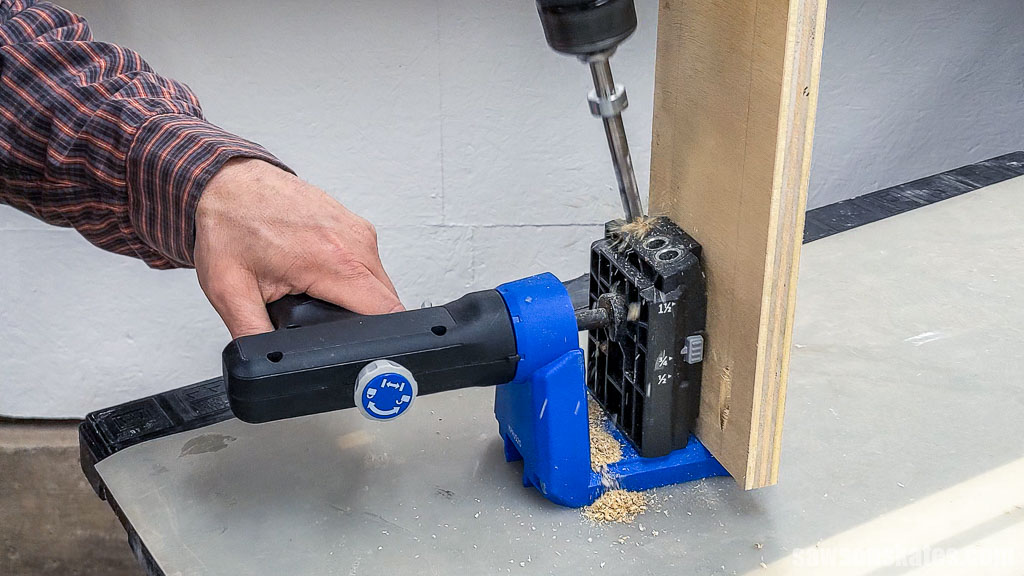
Following the diagram in the printed plan, I marked the location for pocket holes that connect the back to the sides.
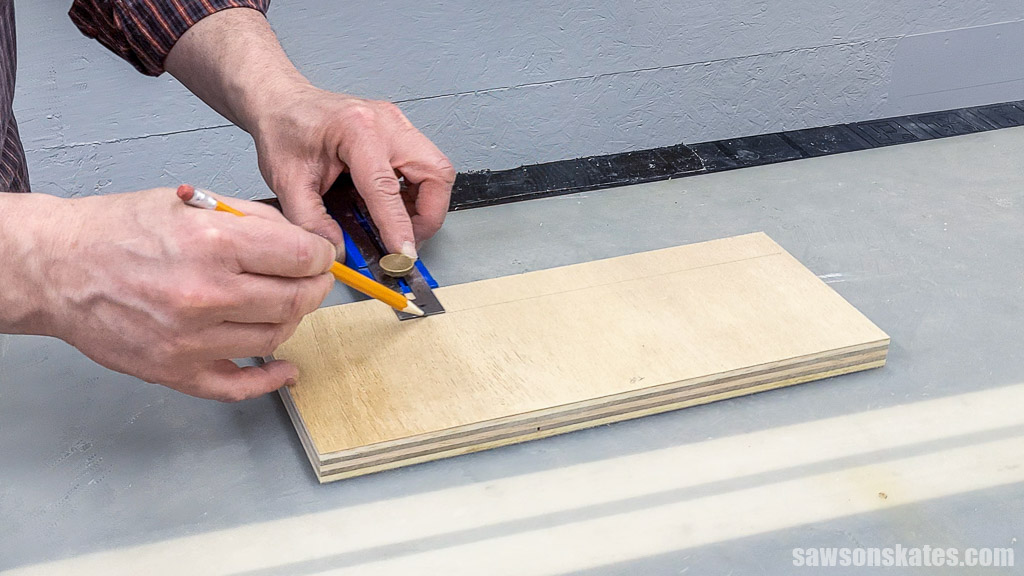
Using my pocket hole jig, I drilled one at each mark.
Related: How to Use a Pocket Hole Jig (& Beginner Mistakes to Avoid)
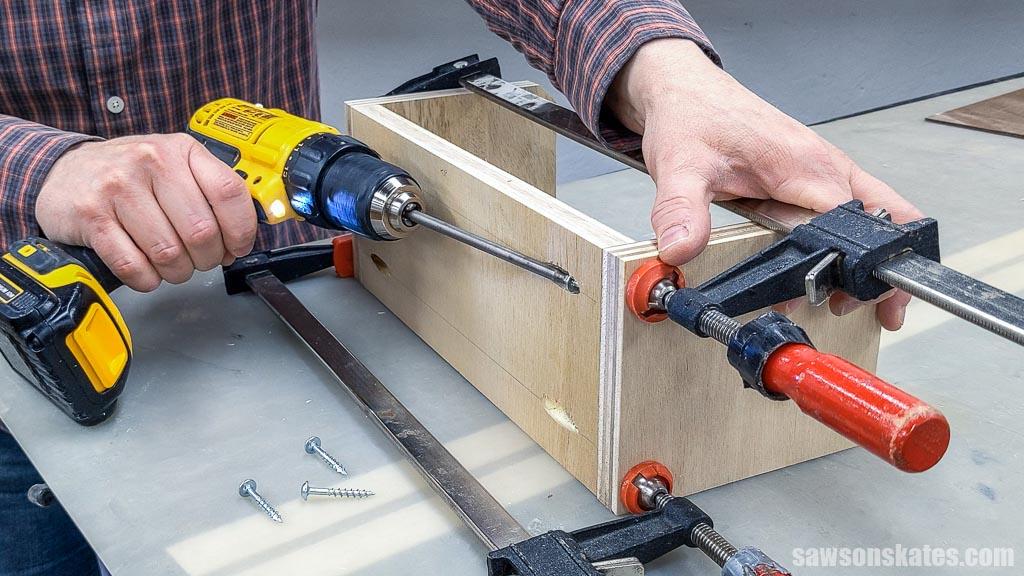
After clamping the back to the sides, I attached them using pocket hole screws.
Step 3. Attach the Shelves
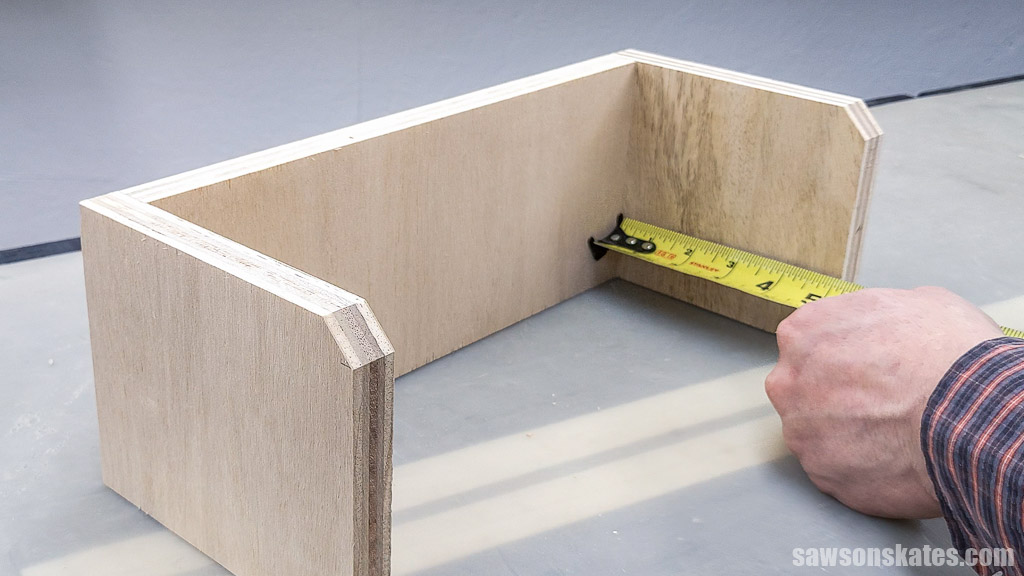
For the best fit, I recommend measuring the side to determine the width of the shelves.
At the table saw, I ripped a piece of plywood to width for the shelves.
I switched to the miter saw to cut two shelves to length.
The top shelf has a hole to accept the jigsaw’s blade.
Following the diagram in the printed plan, I marked its location.
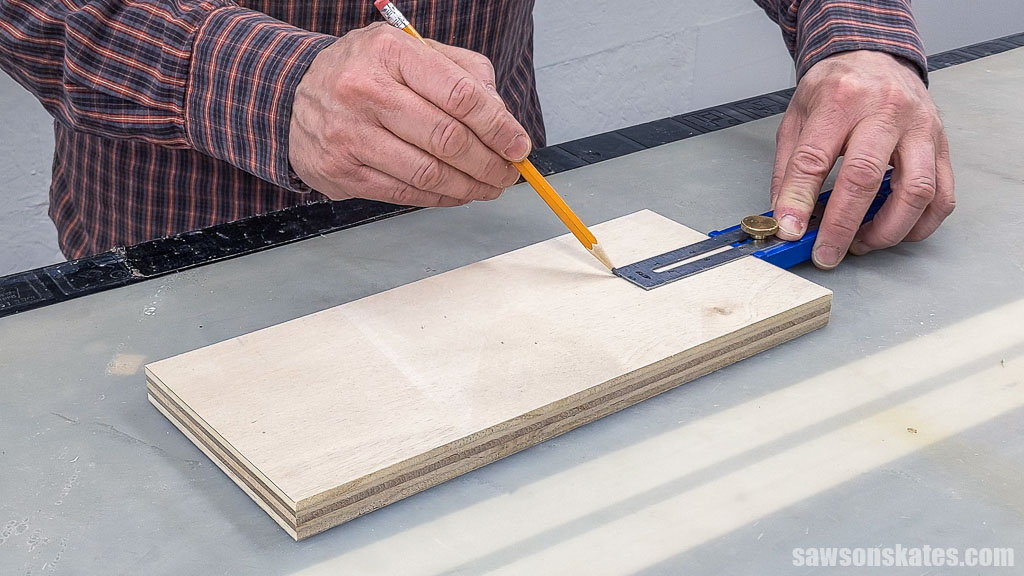
I used an awl to make a starting point for the drill bit.
Related: What is an Awl? (& How to Use It)
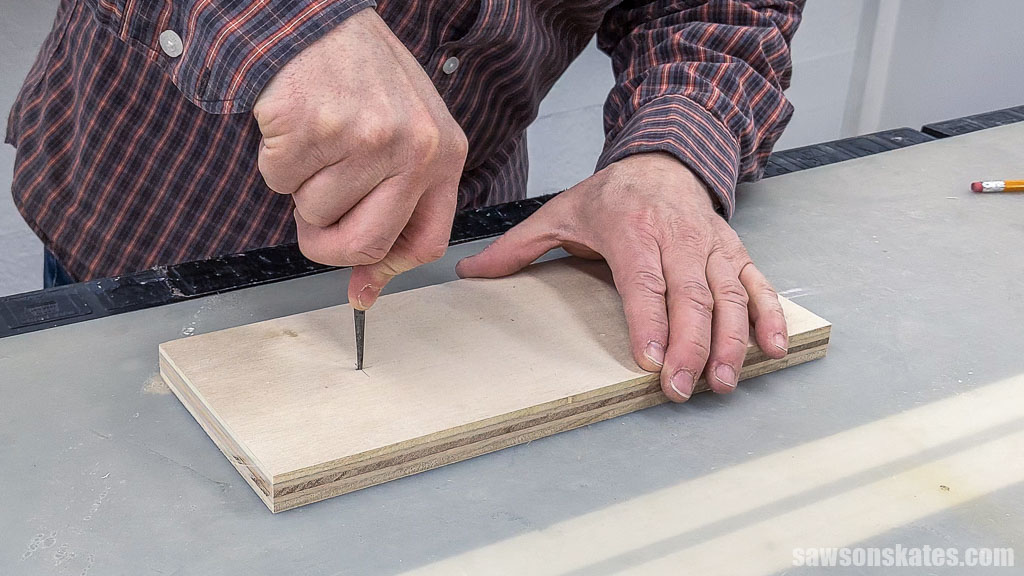
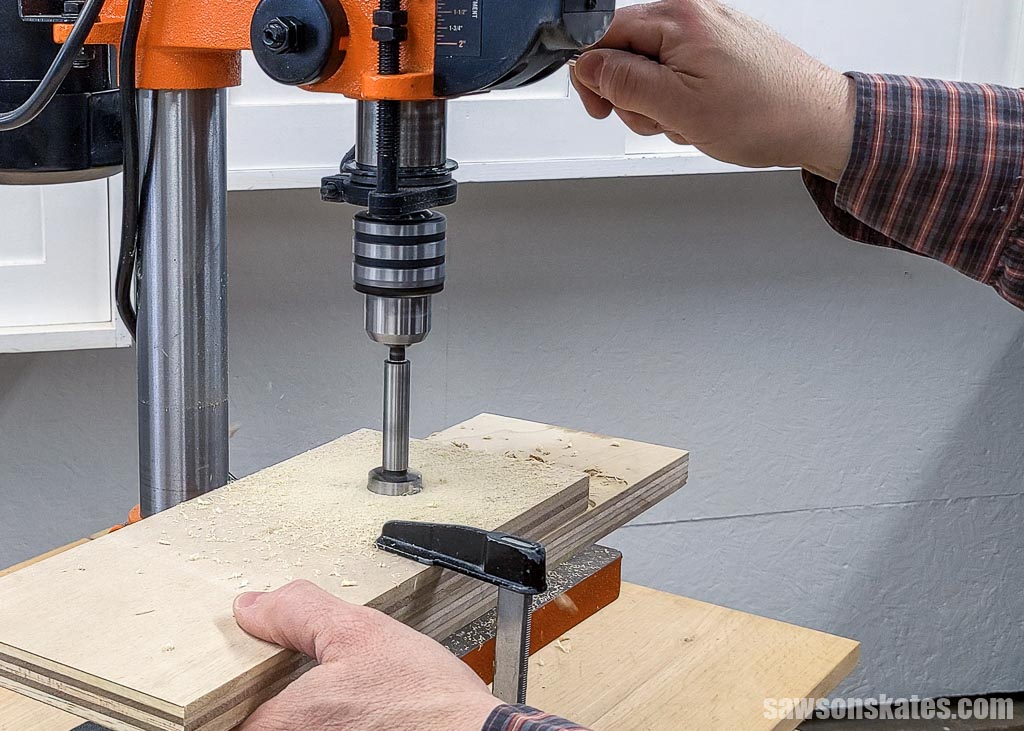
After installing a Forstner bit in the drill press, I positioned the shelf with a sacrificial board beneath it to prevent tearout and damaging the table.
With the drill powered off, I lowered the bit into the indentation I made with the awl.
Once the workpiece was in position, I clamped it to the table.
Be gentle with Forstner bits. Excessive speed or pressure can lead to overheating, which can damage the bit. Use a moderate pace and force for the best results.
Related: What is a Forstner Bit? (& How to Use It)
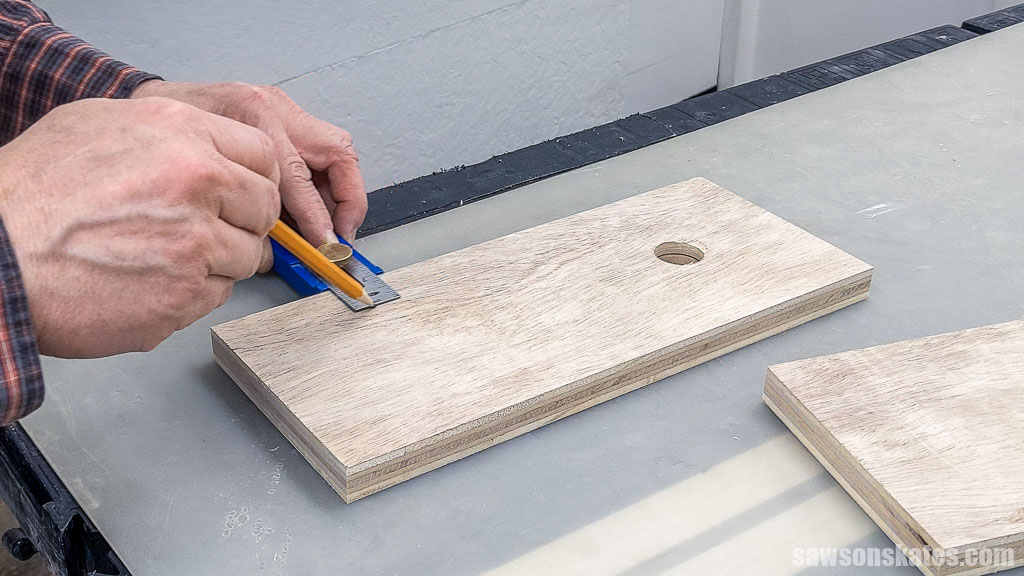
Following the diagram in the printed plan, I marked the locations for pocket holes that connect the shelves to the sides.
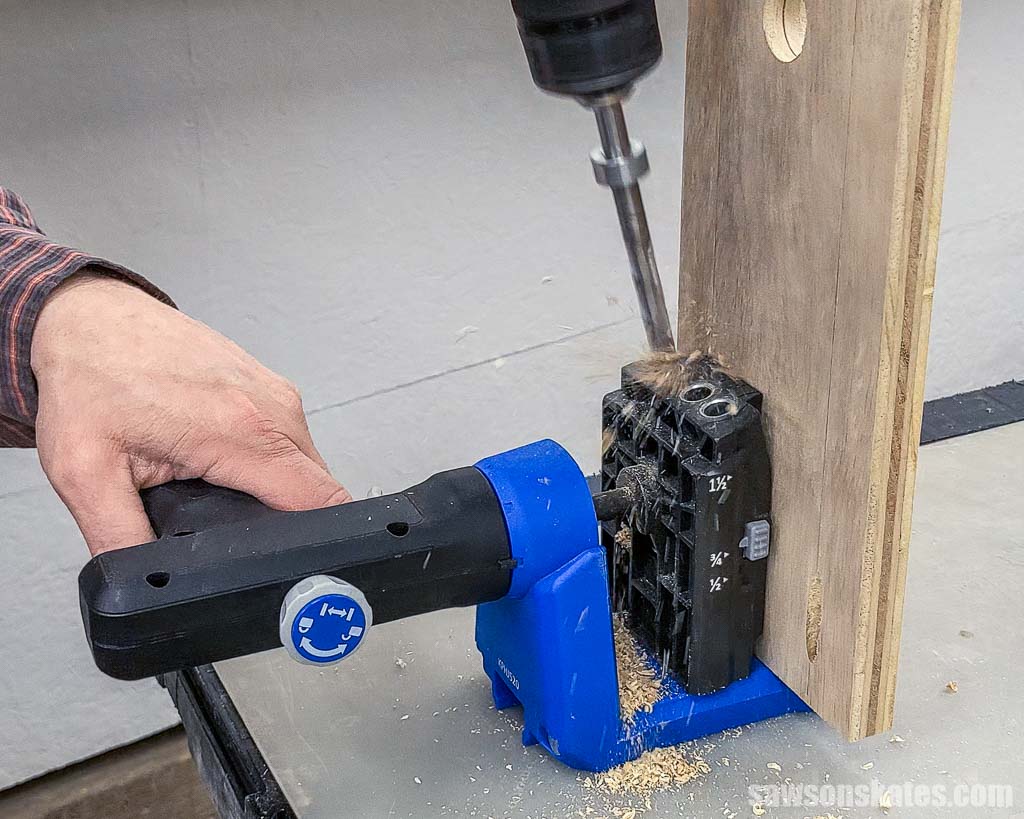
Using my pocket hole jig, I drilled one at each mark.
The top shelf sets up from the holder’s bottom. To help position it, I cut two pieces of scrap wood to length and clamped it to the sides.
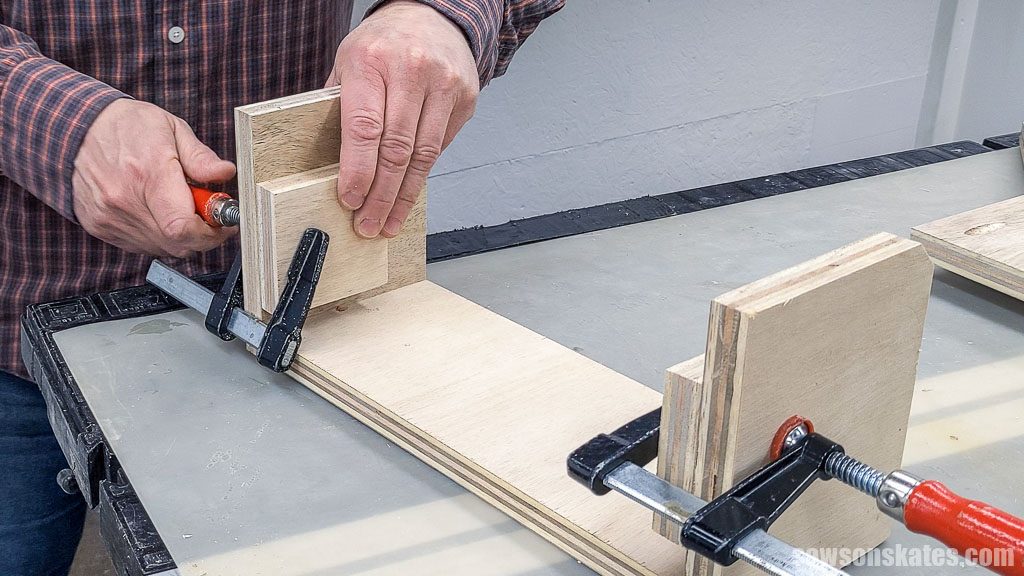
After positioning the shelf, I clamped it in place.
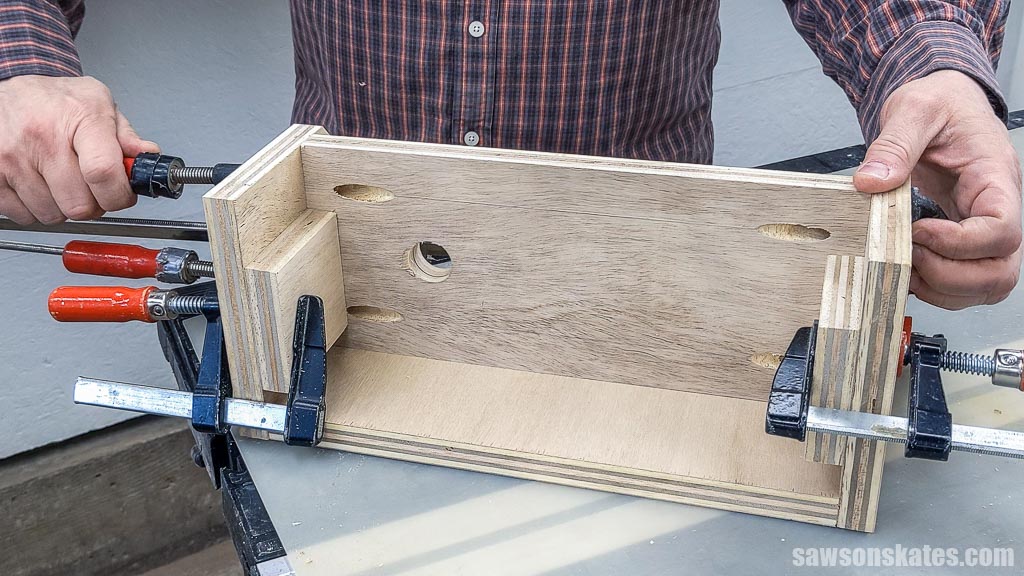
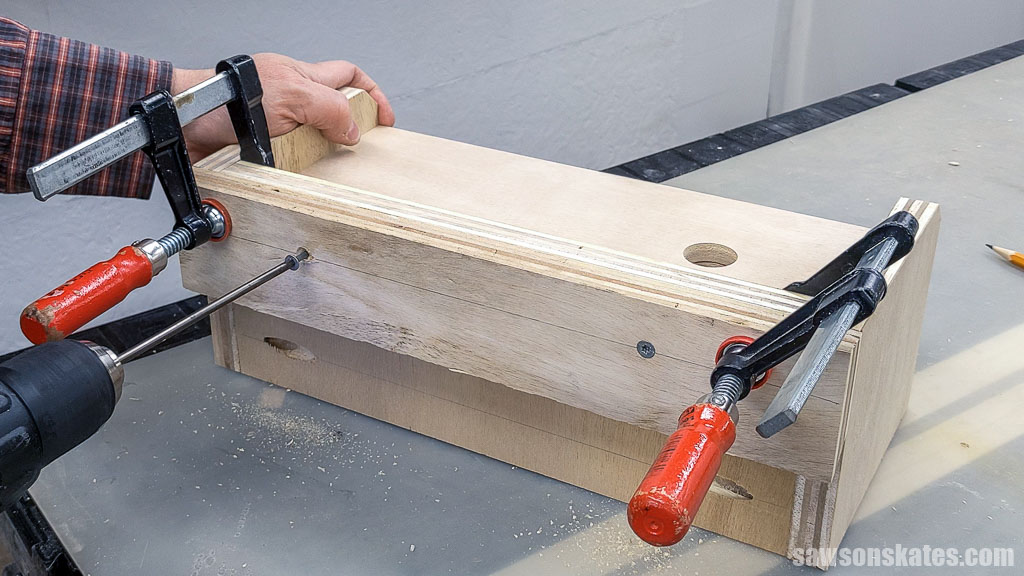
Because of the limited space between the sides, I used a right angle drill attachment to drive the pocket hole screws.
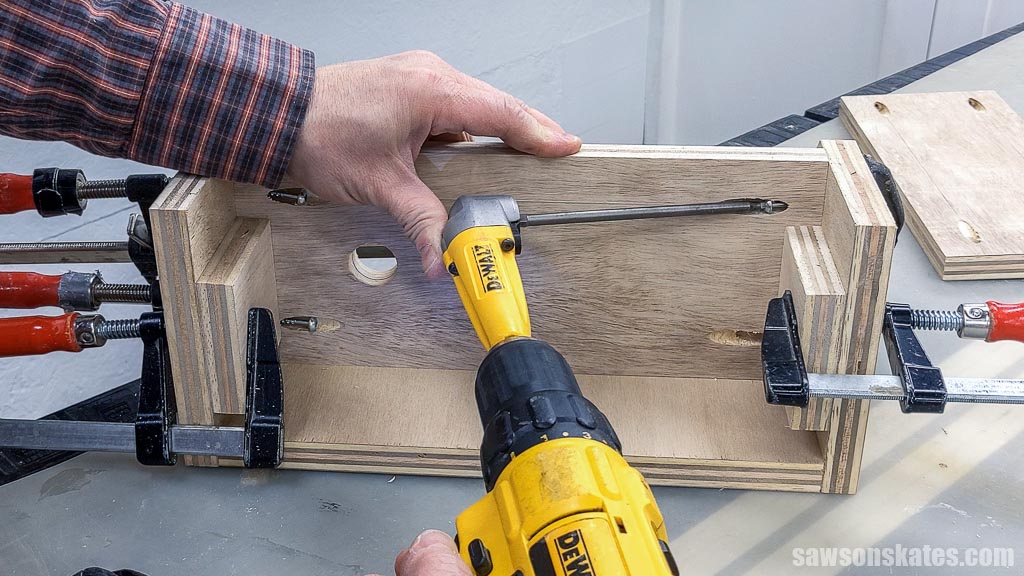
Once I clamped the bottom shelf in place, I attached it to the sides using pocket hole screws.

Step 4. Attach the French Cleat
To hang the shelf, I cut a French cleat to length and clamped it in position.
Related: How to Make a French Cleat
After marking the countersink hole locations, I used an awl to make a starting point for the drill bit and then made the holes with a countersink bit.
Related: How to Use a Countersink Bit
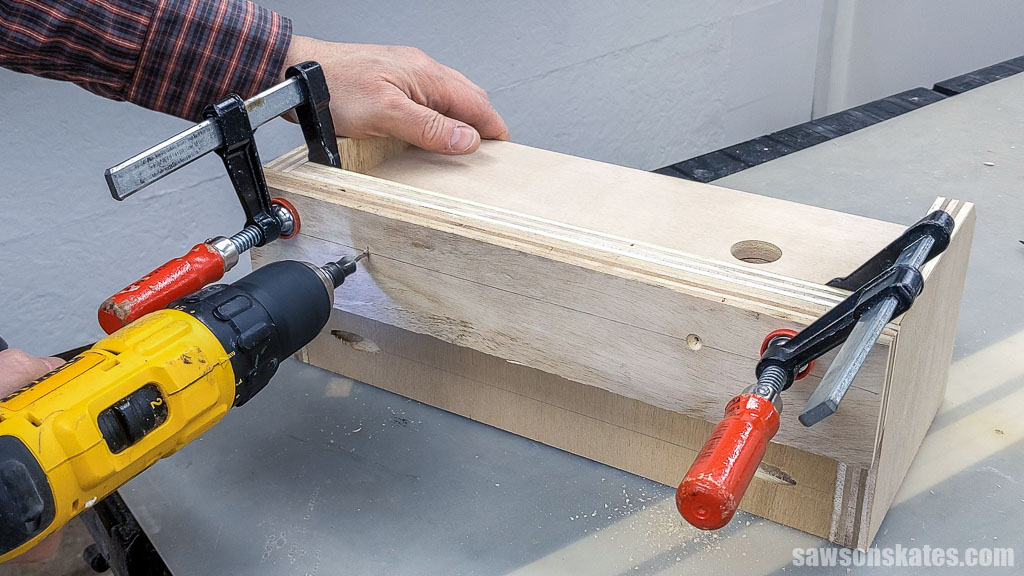
I attached the cleat using wood screws.
That’s it. Your holder is ready to get your jigsaw and blades organized!
Video
Watch now, and I’ll show you step-by-step how to make a DIY French cleat jigsaw holder.
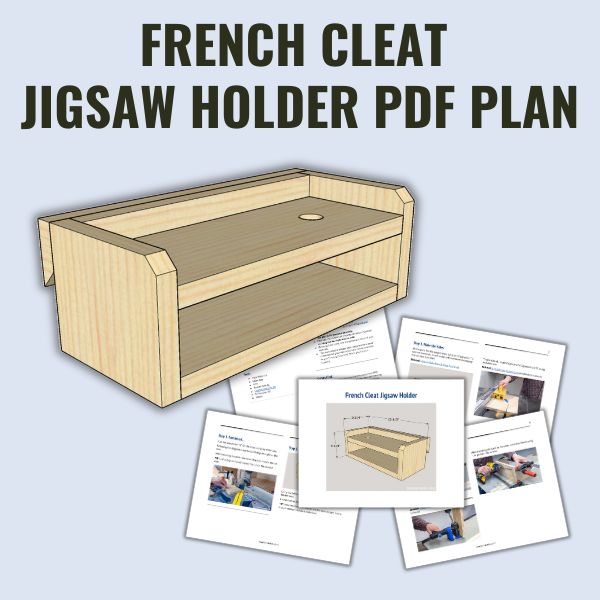
Includes:
- List of tools and materials
- Complete measurements (in inches)
- Easy-to-follow instructions
- Step-by-step photos
- Detailed diagrams
or get the best value:
Final Thoughts
With just a few cuts and some assembly time, you can transform your jigsaw from a storage headache to organized, accessible, and ready to slice through any project. With its space-saving design and easy mounting system, this French cleat jigsaw holder will maximize your storage and convenience.
Don’t wait. Get your PDF plan (including the detailed instructions and measurements) now!
Thank you for stopping by. If you enjoyed this tutorial, would you please take a moment and pin it to Pinterest? I’d really appreciate it!
Recommended For You
Pin This For Later

Hi there – I’m Scott, a woodworking enthusiast and creator of Saws on Skates, a site I started in 2015 to share easy-to-follow tutorials, space-saving shop tips, and project inspiration for DIYers at any skill level. Learn more about my woodworking journey here.